 Beauty
 Bone Health
 Brain Health
 Energy
 Eye Health
 Gut Health
 Hair
Hair
 Hormonal Health
 Heart Health
 Immunity
 Joints
 Menopause
 Pregnancy
 Kids
Kids
 Sleep
Sleep
 Stress & Mood











Quick Answer: Some supplements genuinely amplify each other's effects when taken together, while others compete for absorption or reduce each other's efficacy. The most important pairings to know: Vitamin D3 and K2 work synergistically; iron and calcium block each other; magnesium and Vitamin B6 complement each other; and fat-soluble vitamins (A, D, E, K) all need dietary fat to absorb properly. Timing matters as much as what you take.
Most people taking supplements focus on individual products: which magnesium to buy, whether to add Vitamin D, how much B12 they need. What often gets overlooked is how those supplements interact with each other once they are inside your body. Some combinations are genuinely synergistic, delivering more benefit together than either would alone. Others actively compete, meaning taking them at the same time can reduce absorption of both.
Understanding supplement stacking is not complicated once you know the underlying principles. This guide covers the most important combinations to know, the ones to separate, and some practical timing advice that makes a real difference.
Why Combinations Matter: The Science in Plain Language
Vitamins and minerals are absorbed through specific transport mechanisms in the gut. Some nutrients share the same transporters, meaning they compete for absorption if taken simultaneously. Others depend on each other for activation or utilisation, meaning taking one without the other limits how useful it can be. And some nutrients are fat-soluble, requiring dietary fat present in the gut at the time of ingestion to be absorbed at all.
The good news is that the most important interactions are well understood. Once you know the key pairings, building a sensible supplement routine is relatively straightforward.
Smart Combinations: Supplements That Work Better Together
Vitamin D3 and Vitamin K2
This is the single most important pairing in a well-designed supplement routine, and one of the most frequently missed. Vitamin D3 increases calcium absorption from the gut significantly, which is exactly what you want for bone and immune health. However, if Vitamin K2 is absent, that additional calcium can accumulate in soft tissues, including the arteries, rather than being directed to the bones where it belongs.
Vitamin K2 (specifically the MK-7 form) activates proteins that direct calcium to bones and teeth while simultaneously inhibiting its deposition in arterial walls. The two work as partners: D3 opens the door to calcium, K2 steers it to the right destination. If you are supplementing Vitamin D3, always take it alongside K2.
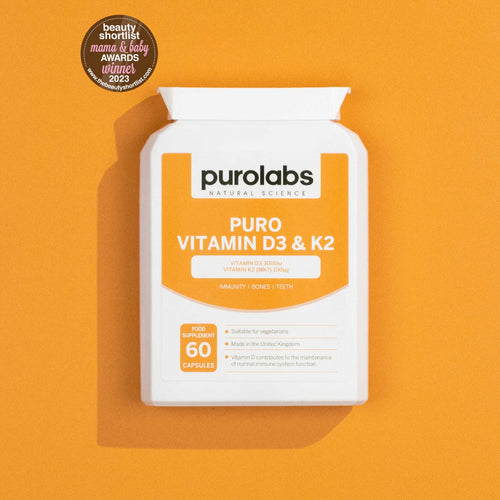
Purolabs D3 & K2 Complex contains both nutrients in a single capsule, with 2000IU of D3 and 75mcg of K2 (MK-7) -- the form best supported by research.
Vitamin D3 & K2
Magnesium and Vitamin B6
Magnesium is involved in over 300 enzymatic reactions, but its absorption and utilisation is enhanced when Vitamin B6 is present. B6 helps transport magnesium into cells and increases the amount of magnesium that accumulates in tissues. Research has found that the combination produces greater reductions in anxiety and PMS symptoms than magnesium alone. This pairing is particularly relevant for women experiencing cyclical hormonal symptoms.
Additionally, Vitamin B6 itself contributes to the regulation of hormonal activity under EFSA-approved claims, making this a doubly useful combination for hormonal health.
Vitamin C and Iron
Non-haem iron, the form found in plant foods and most iron supplements, has relatively low bioavailability when taken alone. Vitamin C dramatically improves its absorption by converting iron to a more soluble form that the gut can take up more readily. Studies have found that taking 200mg of Vitamin C alongside an iron supplement can increase absorption by up to four times. If you take an iron supplement for any reason, take it with a glass of orange juice or alongside a Vitamin C supplement.

Iron Complex
Zinc and Vitamin A
Zinc is required for the liver to mobilise and release Vitamin A from storage into the bloodstream. Without adequate zinc, Vitamin A cannot be properly utilised even if dietary intake is sufficient. This interaction is particularly relevant for people following plant-based diets, who are at higher risk of zinc deficiency and may be consuming beta-carotene (a Vitamin A precursor) rather than preformed Vitamin A.
Omega-3 and Vitamin E
Omega-3 fatty acids are vulnerable to oxidation. Vitamin E is an antioxidant that helps protect them from oxidative damage, both in the supplement capsule and after absorption. Many high-quality fish oil or algae oil supplements already include Vitamin E as a natural preservative for this reason. If yours does not, taking them together is a sensible practice.
What Not to Take Together: Pairings to Separate
|
Combination |
Why It's Problematic |
What to Do Instead |
|
Iron + Calcium |
Both compete for the same gut transporters. Calcium significantly reduces iron absorption when taken simultaneously. |
Take iron at a different meal to calcium. Morning iron with orange juice, calcium with an evening meal works well. |
|
Iron + Zinc |
High doses of zinc inhibit iron absorption, and vice versa. At supplement doses, this competition is meaningful. |
Separate by at least 2 hours, or take on alternate days if both are needed at therapeutic doses. |
|
Vitamin D + Vitamin A (high dose) |
Very high doses of Vitamin A may interfere with Vitamin D receptor activity. This is relevant mainly at supplemental mega-doses. |
Keep Vitamin A intake from supplements within safe limits. Dietary sources are fine alongside D3. |
|
Magnesium + Zinc (high dose) |
Very high doses of zinc can reduce magnesium absorption. At normal supplement doses this is less significant. |
If taking both at higher doses, separate by a few hours. |
|
Fat-soluble vitamins + low-fat meals |
A, D, E and K all require dietary fat for absorption. Taking them on an empty stomach or with a fat-free meal is wasteful. |
Always take fat-soluble vitamins with a meal that includes some healthy fat. |
Timing Your Supplements: A Practical Framework
Most people take all their supplements at once in the morning. For many combinations, this is fine. But separating a few specific nutrients meaningfully improves their effectiveness.
Morning (with breakfast including healthy fat)
• Vitamin D3 + K2 -- fat-soluble, take with food
• Omega-3 -- fat-soluble, take with food
• B Complex or Multivitamin -- B vitamins can be energising, best earlier in the day
• Vitamin C -- water-soluble, fine at any time, but morning works well
Midday or lunchtime
• Iron (if supplementing) -- away from calcium, with Vitamin C
• Zinc (if high-dose and iron is also being taken) -- separate from iron
Evening (with dinner)
• Magnesium -- supports sleep quality and muscle relaxation when taken in the evening
• Calcium (if supplementing) -- away from iron and zinc
• Probiotics -- taking in the evening with food allows bacteria to colonise overnight
These are general guidelines. If you are taking prescription medications, always check interactions with your pharmacist or GP before starting any new supplement.
What About Taking Everything in One Supplement?
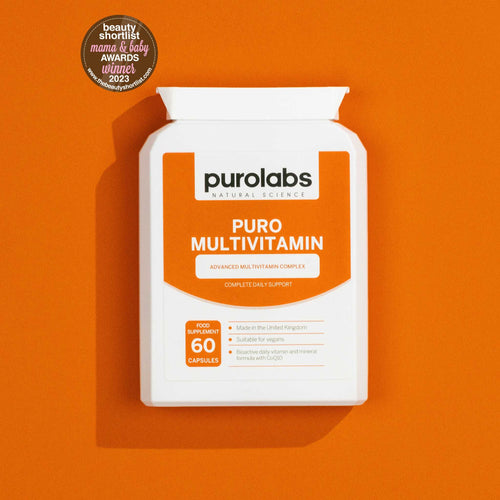
A well-formulated multivitamin handles many of these interactions by design. Purolabs Vegan Multivitamin separates nutrients that compete, includes synergistic pairs in appropriate ratios, and uses bioavailable forms that absorb well without requiring precise timing. For most people, a multivitamin plus a few targeted additions (such as D3/K2, omega-3, magnesium, and probiotics) covers the majority of supplementation needs without requiring careful scheduling.
The supplement stacking principles above become most relevant when you are taking individual supplements at higher, therapeutic doses for specific goals, rather than general nutritional support.
Multivitamin
Frequently Asked Questions
Can I take all my supplements together?
For most standard daily supplements, yes. The main combinations to separate are iron and calcium (take at different meals), and fat-soluble vitamins (A, D, E, K) should always be taken with a meal containing healthy fat. If you are taking iron at therapeutic doses, give it its own meal away from anything that competes for absorption.
Does it matter what time of day I take supplements?
For some supplements, yes. Magnesium is best in the evening as it supports sleep and muscle relaxation. B vitamins are better in the morning as they can be energising. Fat-soluble vitamins require a meal with fat, so they should not be taken on an empty stomach. Water-soluble vitamins (B and C) are more flexible.
Do supplements interact with medications?
Yes, some supplements have clinically significant interactions with certain medications. Vitamin K can affect anticoagulants like warfarin. St John's Wort interacts with a wide range of drugs. High-dose fish oil can affect blood clotting. Always inform your GP and pharmacist of any supplements you take, particularly if your prescription changes.
Is it safe to take Vitamin D and K2 together every day?
Yes, and it is recommended. The combination is not only safe but produces better outcomes for bone health and cardiovascular protection than D3 alone. The K2 MK-7 form at 75-200mcg alongside 1000-2000IU of D3 is the most studied combination.
Which Purolabs products work well together?
D3 & K2 Complex pairs excellently with the Vegan Multivitamin (the multivitamin provides a base, the D3/K2 tops up these nutrients to optimal levels). Adding Magnesium Bisglycinate in the evening and Biotic Complex with a meal covers the main supplementation gaps not addressed by a multivitamin alone.