
 Beauty
 Bone Health
 Brain Health
 Energy
 Eye Health
 Gut Health
 Hair
Hair
 Hormonal Health
 Heart Health
 Immunity
 Joints
 Menopause
 Pregnancy
 Kids
Kids
 Sleep
Sleep
 Stress & Mood











An all-too-common complaint we hear and experience during the winter months is a general feeling of fatigue. “I’m just run down” or “I’m finding it harder to get out of bed in the mornings” or even “I just have this lingering tiredness that I just can’t shake” which can creep in during daily life.
Whilst there can be a multitude of reasons for that, according to the recent National Diet and Nutrition Survey (NDNS), almost a third of adults aged 19 to 64 years have a diagnosable vitamin D deficiency during the winter months1.
Why Vitamin D Deficiency Is So Common in the UK
Vitamin D deficiency is the most commonly recognised nutrient deficiency here in the UK and for good reason. A key way in which we synthesise and absorb this life-giving nutrient is through UV rays. Between the months of October to March, UV rays from natural daylight aren’t quite powerful enough for us to absorb enough vitamin D from sunlight.
It is often why you see nutritional deficiencies becoming more prevalent as the winter months progress, with March being one of the months in which we see the highest rates of vitamin D deficiency2.
Vitamin D can be stored in the liver for several months; if we haven’t absorbed or eaten enough of this nutrient then signs and symptoms of deficiency can get progressively worse by the spring.
Supplementing with vitamin D is even recommended by the UK government as a health tip for all adults across the UK3.
Warning Signs Of Vitamin D Deficiency
Vitamin D is often thought of as a hormone rather than a nutrient. One of the ways in which vitamin D acts as a hormone is its ability to act on distant organs via specific receptors to regulate gene expression, much like classic steroid hormones4.
We need vitamin D to build and produce our sex hormones and to maintain hormonal balance, making a deficiency in this nutrient a common cause of hormonal dysfunction.
Hormonal Imbalance
Common signs of hormonal imbalance can include (but not be limited to):
- Irregular/missed periods
- Infertility
- Fatigue and low mood
- Unexpected weight changes
- Hot flashes
- Low libido
- Brain fog
- Digestive issues
If you are persistently experiencing any of the above symptoms, it’s important to speak to a registered health professional as signs and symptoms can overlap with other potential causes.
Fatigue/Low Energy
The active form of vitamin D (calcitriol) binds to the vitamin D receptor in many cell types, altering gene expression. This not only affects cell growth and differentiation, but it also influences cellular energy production5.
Vitamin D also has a number of mechanisms of action within the human body that indirectly impacts energy. It influences:
Muscle function – Vitamin D deficiency is linked to muscle weakness and fatigue
Mitochondrial function – The energy producing organelle that lives within every single cell
Inflammation – Low vitamin D levels have been shown to be associated with conditions associated with chronic fatigue.
Frequent Colds & Infections
One of the most commonly known benefits of vitamin D is its impact on our immune system and its role in fighting invading pathogens.
The Queen Mary University of London published a global scale analysis of multiple trials and found that vitamin D supplementation reduced the risk of acute respiratory infections, especially in study patients with a vitamin D deficiency6.
A large-scale UK Biobank study highlighted that people with severe vitamin D deficiency were 33% more likely to be hospitalised for respiratory tract infections than those with adequate levels7.
A study that investigated high dose vitamin D supplementation for immune regulation found that it helped to modulate innate immunity (enhancing white cell function) and adaptive immunity (suppressing inflammatory cytokines and promoting B cell activity)8
Poor Bone Health
Vitamin D is required to help the gut absorb calcium and phosphorous, which are critical minerals needed to form and strengthen bones. Without enough vitamin D, less calcium can be absorbed and utilised for bone formation. Studies link conditions like rickets, osteomalacia and osteoporosis with a potential vitamin D deficiency.
It is one of the many reasons as to why vitamin D supplementation is strongly recommended for menopausal women due to its bone protective properties.
Mood & Wellbeing
The English longitudinal Study of Ageing in 2023 found that older adults with low serum vitamin D levels had higher depressive symptoms regardless of confounding variables (other potential contributors)9.
A large-scale systematic review and meta-analysis found that vitamin D supplementation was associated with a lower risk and improved outcome for depression compared with those who didn’t take supplementation in various studies10.
There is also conclusive evidence that vitamin D deficiency is a common cause of SAD (seasonal affective disorder). If you notice a distinct difference between the seasons and your mood, do consider vitamin D supplementation.
Hair Loss
Vitamin D deficiency and hair loss is a less talked about topic.
However, there have been multiple studies linking alopecia and likelihood of vitamin D deficiency11.
A study also highlighted vitamin D deficiency being a risk factor for male-pattern hair loss, with deficiency linked to a greater severity of the condition12.
One potential explanation for the link between hair loss and vitamin D deficiency is the use of vitamin D receptors which are involved in hair follicle cycling and immune regulation. A deficiency may affect hair growth and indirectly contribute to autoimmune-related hair loss.
Muscle Pain & Weakness
Vitamin D deficiency is a well-established cause of muscle weakness and pain in both adults and children. It has been shown to affect muscle cell function and bone-muscle metabolism with studies showing supplementation improving patients with ongoing muscle weakness.
Vitamin D deficiency may be linked to musculoskeletal pain and altered nociception (pain sensitivity).
Who Is Most At Risk In The UK Of Vitamin D Deficiency?
Let’s face it, in the winter months the dark cold evenings and dreary days make it a little difficult to become motivated to get outdoors. The UK population becomes more sedentary during the colder months, leaving our skin even less exposed to UV rays.
Sub populations which are at a higher risk of vitamin D deficiency include:
- Populations with darker skin tones, who require more UV exposure to synthesise vitamin D
- Individuals on a plant-based diet, as vitamin D sources are predominantly found in animal-based foods
- Those who have a diagnosed gut disorder or individuals who have chronic signs of indigestion including chronic bloating, irregular bowel movements and food sensitivities. Impaired gut function can impact vitamin D absorption through food and supplementation
How To Test Your Vitamin D Levels?
The NICE guidelines state that a serum 25-hydroxyvitamin D [25(OH)D] level of less than 25 nmol/l is defined as a vitamin D deficiency13.
It is generally advised by the NHS that all adults supplement with vitamin D during the winter months. However, you can ask your GP for a full blood panel which will include serum vitamin D levels.
This may be especially important to request testing if you have noticed that you are struggling with any of the common signs and symptoms of vitamin D deficiency as outlined above.
Supplementation can be a great way to boost low levels, however if you are struggling with common signs of low vitamin D levels and you are already supplementing with vitamin D, then it is important that you speak to a registered health professional.
The Best Way To Fix A Vitamin D Deficiency In The Winter Months
Taking out the one main contributing mechanism for vitamin D synthesis in the human body (the sun) let’s focus on the ways in which you can increase your vitamin D intake throughout the winter months.
The easiest and most consistent way of measuring vitamin D intake on a daily basis is to supplement with vitamin D. The government recommends a daily dose of 10 micrograms/400 IU) which should be adequate enough for the majority of the adult UK population.
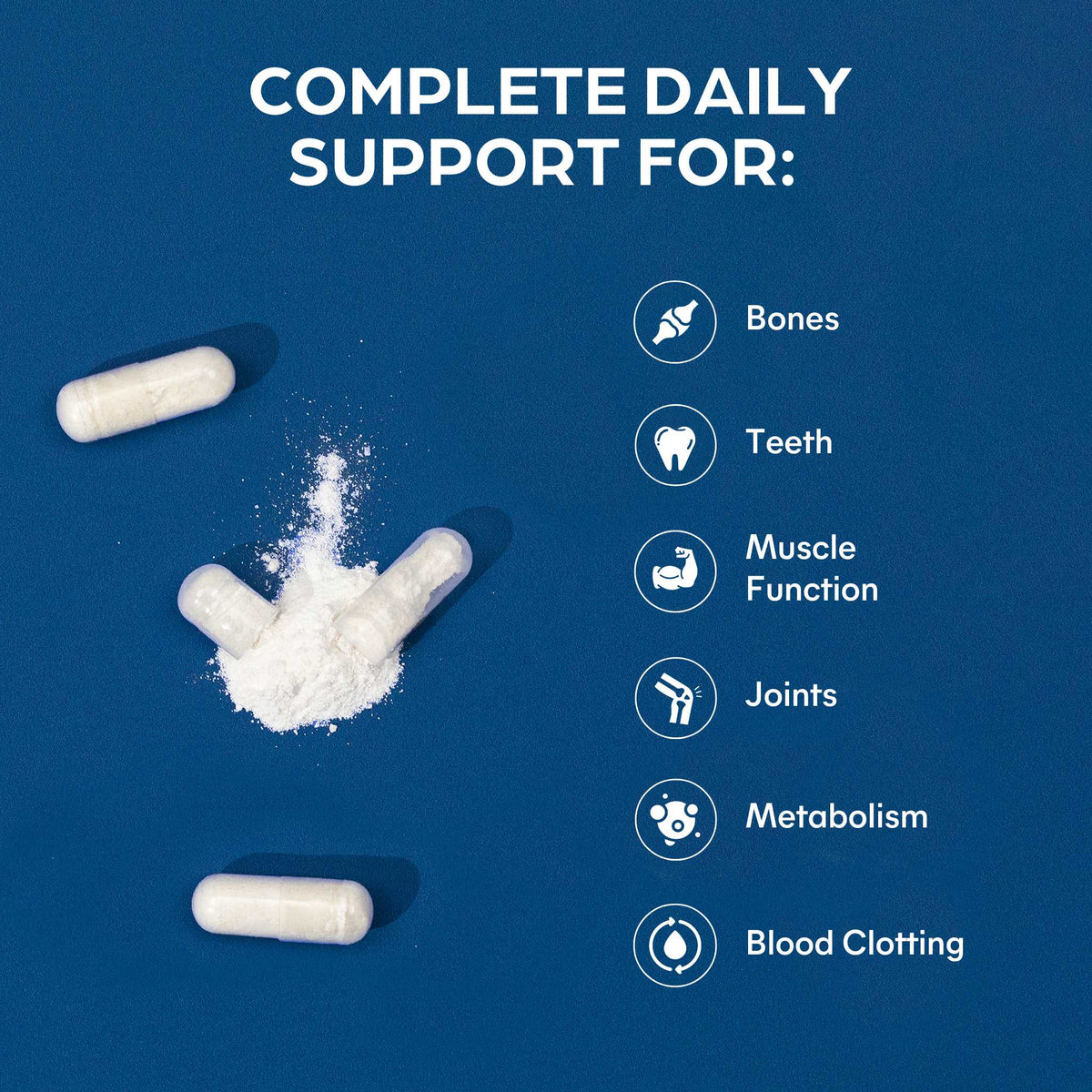
Our vitamin D & K2 supplement at Purolabs covers the government recommended daily dose of vitamin D, plus it contains added K2 which helps to increase vitamin D absorption in the gut. K2 has also been shown to directly increase calcium absorption helping to shunt calcium into bones and teeth and away from arteries, which makes it especially useful for older populations and those looking to support their heart and bone health.
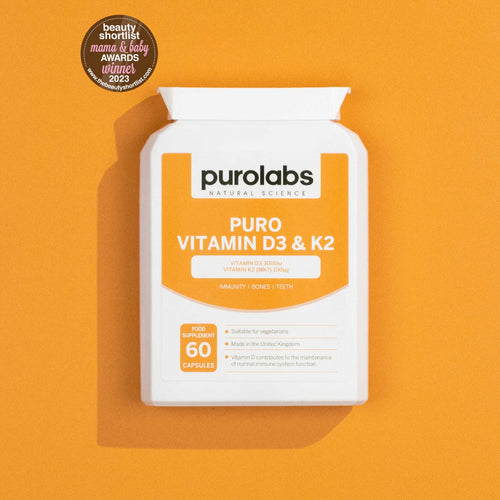
Vitamin D3 & K2
As vitamin D is a fat-soluble nutrient, the best way to administer it is to take it with any meal that is convenient or that you will remember to take consistently. This will help boost absorption and improve intake as supplementation would need to become part of your daily ritual in order to see and feel results.
Many foods like milk and cereals have been fortified with vitamin D to help the population obtain more vitamin D through dietary sources14. However, natural food sources of vitamin D include:
- Fatty fish including salmon, mackerel, herring, trout, kippers
- Eggs
- Mushrooms
- Liver