











Quick Answer: B vitamins are among the most important nutritional considerations during menopause. As oestrogen production shifts from the ovaries to the adrenal glands, B vitamins, particularly B6, B2, B12, and folate, support adrenal function, oestrogen production, bone density, brain fog, cardiovascular health, and energy metabolism. B12 deficiency in particular can mimic anxiety and depression symptoms, which are already common during this life stage. A high-quality B complex is one of the most well-evidenced nutritional interventions for perimenopause and menopause.
Menopause is, quite rightly, gaining the awareness it deserves. Whilst it is an entirely natural life stage for every woman, it does not come without its fair share of uncomfortable, and in some cases life-impacting symptoms. These range from changes in mood, memory, and concentration, to hot flushes, headaches, reduced libido, weight changes, and fatigue.
A topic that has historically lacked open discussion, menopause is now increasingly recognised as a major public health and workplace issue. Menopausal women are the fastest-growing demographic in the workforce, and the British Menopause Society found that nearly half of women who required time off for symptoms felt unable to tell their employer the real reason. Awareness is improving, and so is the nutritional science behind supporting the transition.
Whilst a well-rounded wholefood diet is important at every life stage, this article focuses specifically on the group of nutrients with some of the strongest evidence for menopause support: the B vitamins.
Vitamin B Complex
Why the Adrenal Connection Matters
As women enter perimenopause, oestrogen production naturally shifts from the ovaries to the adrenal glands. The adrenals are already responsible for regulating the stress response, immune function, metabolism, and blood pressure — and taking on oestrogen production as well places significant additional demand on them. This is one of the key reasons why increased stress reactivity, poor sleep, and mood dysregulation are so commonly reported during the menopause transition.
Vitamin B6 directly supports adrenal function by contributing to cortisol (the stress hormone) regulation. Adequate B6 status helps the adrenals manage this increased workload, reducing the risk of adrenal exhaustion and supporting a more stable stress response during what is physiologically a very demanding period.
B Vitamins and Bone Health
Oestrogen plays a critical role in bone density by stimulating bone rebuilding activity. As oestrogen declines during menopause, bone mineral density naturally reduces, increasing the risk of osteopenia and fracture. What is less widely known is that B vitamin status compounds this risk independently.
Research has found that low B2 (riboflavin) in menopausal women is associated with nearly twice the risk of osteoporotic fracture. Folate, B12, and B6 deficiency have all been linked to poorer bone mineral density. Ensuring adequate intake of the full B complex — not just the individual vitamins most commonly discussed in menopause, provides meaningful protection for skeletal health during and after this transition.
Brain Fog, Memory, and Cognitive Function
Brain fog is one of the most commonly reported and least understood symptoms of menopause. B vitamins B1, B2, and B7 (biotin) have all been associated with improved cognitive functions including learning, memory, reasoning, and problem solving.
Particularly relevant is the relationship between B vitamins and homocysteine — an inflammatory by-product of normal metabolism that, when elevated, is strongly associated with cognitive decline. Multiple studies have demonstrated that B vitamin deficiency correlates directly with elevated homocysteine, and that this in turn increases dementia risk during and after the menopause transition. Supplementing with a comprehensive B complex is one of the most evidence-backed strategies for protecting cognitive function in this life stage.
Whilst hormonal and psychological shifts are the primary drivers of anxiety and depression during menopause, B12 deficiency can independently mimic both conditions, causing low mood, fatigue, and psychological symptoms that may be attributed incorrectly to menopause itself. Always worth ruling out before assuming all mood changes are hormonal in origin.
B Vitamins and Cardiovascular Risk
Oestrogen is cardioprotective; it actively helps reduce cardiovascular disease risk. As oestrogen declines during menopause, the cardiovascular risk that is typically lower in premenopausal women begins to equalise with that seen in men of similar age. This is one of the most significant long-term health implications of the menopause transition.
B vitamins offer meaningful support here. High intakes of folate, B6, and B12 have been shown to lower cardiovascular disease risk in both men and women without a prior history of heart disease, partly through their role in homocysteine metabolism. Homocysteine is a recognised independent cardiovascular risk factor, and B vitamins are essential cofactors in the pathway that breaks it down.
Energy, Metabolism, and Fatigue
General fatigue is one of the most consistently reported symptoms of menopause. B vitamins are fundamentally involved in the metabolic processes through which the body converts food, carbohydrates, fats, and proteins, into usable energy. Every cell in the body requires B vitamins for energy production, which is why deficiency produces systemic fatigue rather than localised symptoms. Low B vitamin status during an already energy-demanding life transition significantly compounds the fatigue burden.
Supports Healthy Oestrogen Levels
B vitamins, particularly B2 and B6, play a direct role in oestrogen production. Whilst a gradual decline in oestrogen is a natural and inevitable part of menopause, deficiency in these specific B vitamins can accelerate the reduction beyond what is expected. Supporting B vitamin status helps ensure that the body produces as much oestrogen as it is naturally capable of at each stage of the transition.
The B Vitamins at a Glance
|
B Vitamin |
Key Role in Menopause |
Deficiency Risk |
|
B2 (Riboflavin) |
Bone density; associated with 2x fracture risk when low; antioxidant |
Common in restrictive diets |
|
B6 (Pyridoxine) |
Adrenal/cortisol support; oestrogen production; hormonal activity regulation |
Depleted by oral contraceptive use |
|
B7 (Biotin) |
Cognitive function; energy metabolism; hair and skin health |
Can be depleted by gut dysbiosis |
|
B9 (Folate) |
Bone mineral density; homocysteine metabolism; cardiovascular protection |
Common; especially in those not eating leafy greens |
|
B12 (Cobalamin) |
Nervous system health; homocysteine; can mimic anxiety and depression when deficient |
Vegans, vegetarians, post-50s (reduced absorption) |
|
B3, B1, B5 |
Energy metabolism; nervous system; adrenal support |
Less common in isolation; often deficient as a group |
Purolabs B Complex
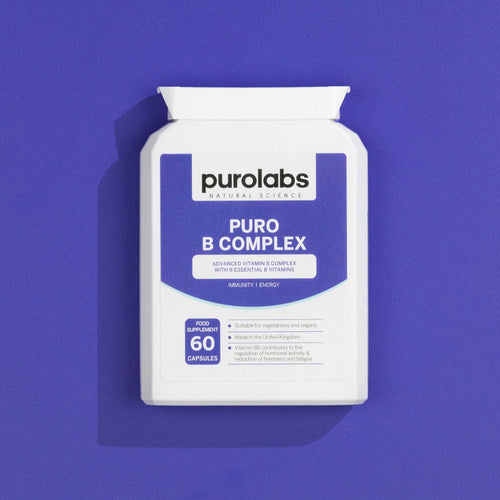
Purolabs B Complex provides all eight essential B vitamins at over 100% NRV, in their most bioavailable forms, including methylcobalamin B12 (the form the body can use immediately) rather than the cheaper cyanocobalamin found in most supplements. It also includes PABA, which supports skin, hair, and cellular health beyond the standard B complex formula. One capsule daily, vegan-friendly, and free from all synthetic additives.
"100% recommend this product! I have been suffering for years from chronic fatigue; my energy would drop to zero. I tried everything, but nothing worked until I tried this. After 3 weeks I feel like my body now has the thing that was missing."
— Martin, verified Purolabs customer
Vitamin B Complex
For women who have been diagnosed with, or suspect, B12 deficiency specifically — particularly vegans, vegetarians, or those over 50 whose stomach acid production naturally declines, Purolabs B12 provides 1,000µg of methylcobalamin per capsule, one of the highest-strength single B12 formulations on the UK market.

Vitamin B12
Frequently Asked Questions
Should I take a B complex or individual B vitamins during menopause?
A B complex is almost always preferable to individual B vitamins during menopause. B vitamins work synergistically — they rely on each other for absorption and metabolism — and taking a single B vitamin in isolation can create imbalances in the others. The exception is B12, which can be taken in higher therapeutic doses as a standalone supplement if deficiency has been confirmed. For general menopause support, a comprehensive B complex that includes all eight vitamins at meaningful doses is the most sensible approach.
How quickly will I notice a difference from B vitamins during menopause?
Energy and mood improvements are often among the first changes noticed, typically within two to four weeks of consistent supplementation. Brain fog and cognitive symptoms may take longer — four to eight weeks. Bone density and cardiovascular changes occur over months rather than weeks and are not perceptible without clinical testing, but the protective benefit accumulates over time.
Can B vitamins help with menopause brain fog specifically?
Yes. B1, B2, and B7 have the strongest associations with cognitive function including memory, reasoning, and problem solving. B12 and folate specifically protect against elevated homocysteine, which is linked to cognitive decline. Ensuring adequate B vitamin status is one of the most practically actionable nutritional steps for managing brain fog during the menopause transition.
Are B vitamins safe to take alongside HRT?
B vitamins are water-soluble and are not contraindicated with HRT. They work through complementary rather than competing mechanisms. As always, if you are on any prescription medication it is worth mentioning your supplement routine to your GP, but B vitamins are among the lowest-risk supplements in clinical practice and are broadly regarded as safe for concurrent use.
What is the difference between folic acid and folate?
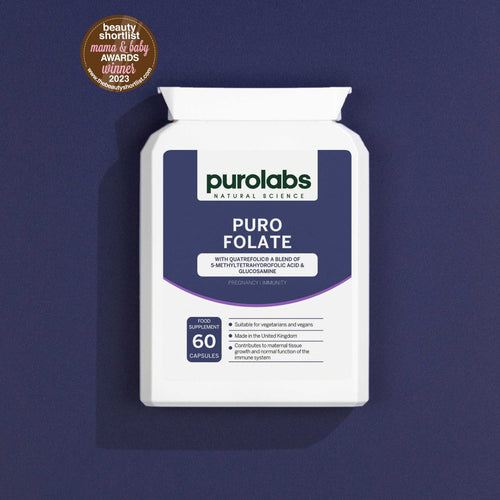
Folic acid is the synthetic form of B9 used in most supplements and fortified foods. Methylated folate (5-MTHF, such as the Quatrefolic form used in Purolabs Folate) is the active form the body can use directly. Approximately 40% of the population carry a variation in the MTHFR gene that reduces their ability to convert folic acid into active folate — meaning standard folic acid supplements are significantly less effective for this group. If you are supplementing specifically for bone or cognitive protection during menopause, the methylated form is worth considering.