


Best Folate Supplements UK 2026 for Pregnancy, Energy & Cell Health

From quality and safety to ratings and reviews, find out which folate supplements we deemed best in class of 2026.

Woman with healthy energy holding folate supplement
Steph Baker - Registered Nutritionist
Reviewed by Steph Baker Registered MSc Nutritionist
Expert Reviewed

Folate is one of the vitamins your body cannot do without. The NHS recommends it for every woman planning pregnancy, specifically to support healthy neural tube development in the first 12 weeks. But folate does far more than that. It contributes to normal energy levels, red blood cell formation, and psychological function, which is why so many people take it for fatigue, low mood, and general wellbeing.

Here is the problem: most folate supplements use synthetic folic acid, and your body has to convert it before it can use it. Research suggests that around 40% of people carry a common gene variation (MTHFR) that makes this conversion significantly less efficient. The result? You could be taking folate every day and absorbing only a fraction of what the label promises.

The solution is simple. Methylfolate (5-MTHF) is the active form your body can use immediately, no conversion required. Whether you are planning a pregnancy, managing tiredness, or simply want the most effective form of this essential vitamin, the type of folate matters as much as the dose. We reviewed dozens of UK products to find the five that get it right.

Your Top Folate Questions Answered
What is the difference between folate and folic acid? +

Folate is the natural form of vitamin B9 found in foods like leafy greens and legumes. Folic acid is the synthetic, lab-made version added to most supplements and fortified foods. The critical difference is that folic acid requires a multi-step enzymatic conversion before your body can use it. Methylfolate (5-MTHF) skips this process entirely. Think of it like the difference between needing to assemble furniture versus buying it pre-built.

Who is most at risk of folate deficiency? +

Women planning or in early pregnancy are the most commonly advised group, but folate deficiency can affect anyone. Vegans and vegetarians may fall short if their diet lacks leafy greens and legumes. People taking certain medications (including methotrexate and some anti-epileptics) can have their folate levels depleted. Those with digestive conditions like coeliac disease may absorb less from food. Older adults and heavy alcohol consumers are also at higher risk. If you experience persistent fatigue, low mood, or mouth ulcers, it may be worth asking your GP to check your folate levels.

How much folate do I need daily? +

The NHS recommends 400mcg of folate daily for most adults. Women planning pregnancy should take 400mcg daily from before conception through the first 12 weeks of pregnancy to support healthy fetal development. Some individuals may benefit from higher doses (1000mcg or more) under medical guidance.

Can I get enough folate from food? +

It's possible but difficult. Folate-rich foods like spinach, lentils, and broccoli lose 50-90% of their folate content during cooking. You'd need roughly 6 cups of cooked spinach daily to reach the NHS recommended 400mcg. For women planning pregnancy, the NHS explicitly recommends a supplement rather than relying on diet alone.

How long does it take to feel a difference? +

This varies depending on your baseline folate levels. If you are significantly deficient, many people notice improvements in energy and mood within 2-4 weeks. Folate's role in homocysteine regulation can take 6-8 weeks to show meaningful changes in blood markers. For pregnancy planning, the NHS recommends starting supplementation at least one month before conception, with benefits building over time rather than appearing immediately.

Why Folate Matters for Pregnancy, Energy & Everyday Health

Folate (vitamin B9) plays a role in some of the most essential processes in your body. It contributes to red blood cell formation, which is why low levels often show up as persistent tiredness. It supports normal psychological function, helping to explain the mood changes that can accompany deficiency. And it is central to cell division, the reason it is so important during early pregnancy.

But folate is not only a pregnancy vitamin. Anyone experiencing unexplained fatigue, low mood, or difficulty concentrating may benefit from checking their intake. People on certain medications, those with digestive conditions that affect absorption, and anyone with a restricted diet are also at higher risk of falling short.

A Quality Folate Supplement Can:
  • Support healthy energy levels and reduce fatigue
  • Contribute to normal red blood cell formation
  • Support maternal tissue growth during pregnancy
  • Help maintain healthy homocysteine levels
  • Support normal psychological function and mood
  • Play a role in the process of cell division

Choosing the Right Format for You

Folate supplements come in several formats. Each has practical trade-offs worth considering, especially if you are taking it daily during pregnancy or for long-term health.

Tablets
Capsules
Gummies
Active Form Available? Rarely Some
Added Sugar None None 2-4g per serving
Additives Binders, coatings Minimal Sweeteners, colours
Pregnancy Friendly Check ingredients
Best For Budget option Clean daily use Difficulty swallowing

Our recommendation: Capsules offer the best balance of clean formulation, accurate dosing, and availability in active methylfolate forms. Gummies can work for those who struggle with capsules, but check for added sugar and sweeteners. The best format is the one you will take consistently.

What To Look For In A Folate Supplement
Methylfolate (5-MTHF) Form

The most important factor is the form of folate used. Look for 5-MTHF, L-methylfolate, or methyltetrahydrofolate. These are the bioactive forms your body can use immediately, regardless of your genetic makeup. Supplements that list only "folic acid" offer significantly lower absorption for a large portion of the population.

Patented Form (Quatrefolic)

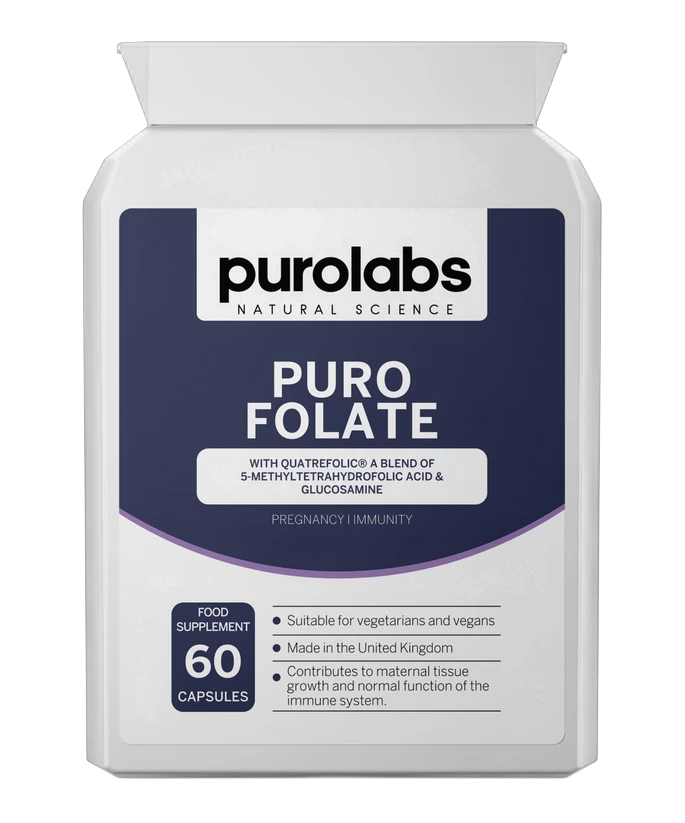
Not all methylfolate is equal. Quatrefolic is a patented glucosamine salt of 5-MTHF with published stability and bioavailability data. Generic methylfolate can degrade before you even open the bottle. A named, patented ingredient is a reliable sign that the manufacturer has invested in quality.

Clean Formula

Quality folate supplements should contain minimal additional ingredients. Look for products free from titanium dioxide, artificial colours, magnesium stearate, and unnecessary bulking agents. Natural alternatives such as rice flour and bamboo silica are a sign of a manufacturer that takes formulation seriously.

Made in the UK

UK GMP-certified facilities are independently audited for quality, hygiene, and accurate dosing, with stricter manufacturing standards than many overseas counterparts. For a supplement you may be taking during pregnancy, knowing exactly where and how it was made is not a minor detail.

Money-Back Guarantee

A genuine satisfaction guarantee, ideally 60 days or longer, signals that the manufacturer stands behind the product. It also removes the financial risk of trying a new supplement. Brands that offer no returns policy give you no recourse if the product falls short of its claims.

What To Avoid In A Folate Supplement
Synthetic Folic Acid as the Only Form

Folic acid is the cheapest form of folate, but your body has to convert it before it can use it. Many people do not convert it efficiently, which means the folate on the label does not match what actually reaches your cells. Look for methylfolate (5-MTHF) instead, which your body can use straight away without any conversion step.

Therapeutic-Dose Products for Everyday Use

Some brands market doses of 5mg (5,000mcg) or higher, which is over 12 times the NHS recommended daily amount. At these levels, excess folate can mask the symptoms of vitamin B12 deficiency, potentially delaying diagnosis of a serious neurological condition. Unless your GP has confirmed a severe deficiency, 400-1,000mcg is the evidence-based range for most adults.

Vague or Unstated Dosages

Some folate supplements list "folate" on the label without specifying the exact form or the precise amount per capsule in micrograms. If you cannot verify whether you are taking 200mcg, 400mcg, or more, you have no way to compare it against NHS guidance. Transparent dosage labelling is a basic standard: if it is not there, treat it as a red flag.

Unnecessary Fillers and Additives

Titanium dioxide, magnesium stearate, artificial colours, and bulking agents have no nutritional value and no place in a folate supplement. Some brands use them to cut costs or speed up manufacturing. A clean formula should need very little beyond the active ingredient and a natural carrier like rice flour. If the ingredient list is longer than the benefits, that is a warning sign.

Top 5 Folate Supplements Of 2026

After extensive testing and research, these are the products that made our list.

B+ Overall Grade

Pros

  • Uses Quatrefolic patented form
  • High potency 5mg option available
  • Good value per mcg for high-dose needs
  • Third-party tested for purity
  • Widely available on Amazon UK
  • Trusted by US supplement community

Cons

  • 5mg may be excessive for most people without medical guidance
  • Higher price point (around £40 per bottle)
  • Formula includes microcrystalline cellulose and silicon dioxide
  • Larger capsules due to high dose

The Bottom Line

Intelligent Labs uses the same patented Quatrefolic form as our top pick, and independent third-party testing adds confidence. A genuinely well-made product.

The catch is the dose. At 5mg (5,000mcg), this is a therapeutic-level product designed for people with a confirmed deficiency, not everyday use. The price (around £40) and larger capsule size reflect that positioning.

Best for: those with a confirmed deficiency who need a high dose under GP guidance.

*Results and rankings are based on subjective opinion and do not necessarily reflect typical results from the use of these products. Please visit product website for more information.

B Overall Grade

Pros

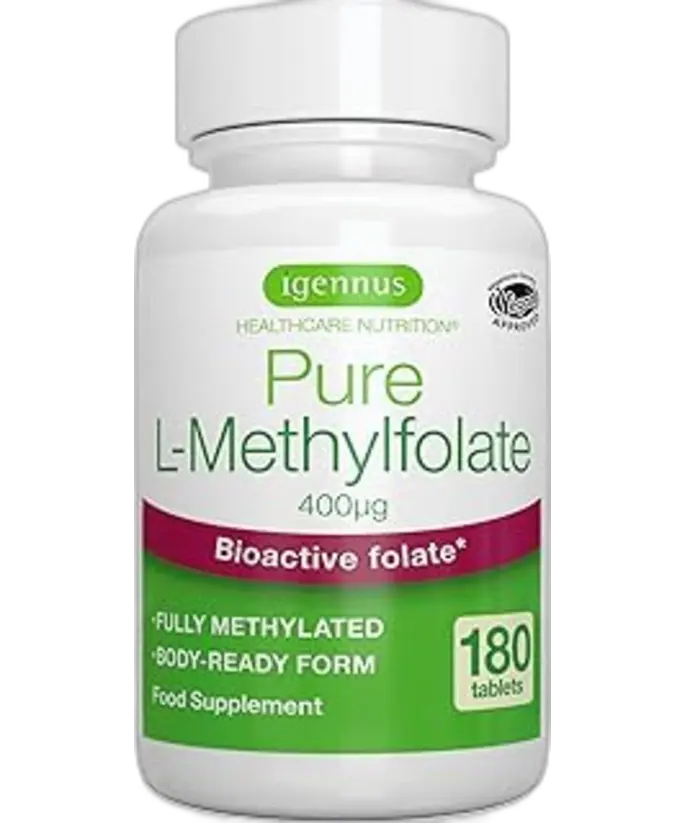
  • Uses calcium L-methylfolate (active form)
  • 180 tablets (6-month supply)
  • Small, easy-to-swallow tablets
  • Vegan and Halal certified
  • Science-focused UK brand

Cons

  • Not a patented form (Quatrefolic has its own clinical dossier)
  • Tablet format requires more excipients than capsule alternatives
  • Contains dicalcium phosphate and ascorbyl palmitate as additives
  • No money-back guarantee mentioned

The Bottom Line

Igennus is a well-respected science-focused UK brand, and 180 tablets for a 6-month supply is hard to beat on value. The active ingredient is calcium L-methylfolate, a genuine bioactive form your body can use directly.

The trade-off is the tablet format, which requires more binding agents and excipients than capsules. The methylfolate used is not a patented form, so there is less published stability data compared to branded ingredients like Quatrefolic.

Best for: those who want a 6-month supply from an established brand at a competitive price.

*Results and rankings are based on subjective opinion and do not necessarily reflect typical results from the use of these products. Please visit product website for more information.

C+ Overall Grade

Pros

  • Uses genuine 5-MTHF calcium salt (active form)
  • Includes magnesium citrate for absorption
  • UK manufactured, GMP certified
  • Competitive pricing (under £10)
  • 90 vegan capsules (3-month supply)

Cons

  • Not a patented form (no dedicated clinical dossier)
  • 1,000mcg exceeds the NHS recommended 400mcg
  • Limited published third-party testing data
  • Less established brand compared to top-tier alternatives

The Bottom Line

Health4All pairs genuine 5-MTHF with magnesium citrate in a relatively clean capsule formula. At under £10 for a 3-month supply, it is one of the most affordable active folate options on the market.

The 1,000mcg dose is more than double the NHS recommendation, so it is better suited to people who know they need a higher intake. Third-party testing data is limited compared to premium brands.

Best for: budget-conscious shoppers who want active folate and have confirmed they need a higher dose.

*Results and rankings are based on subjective opinion and do not necessarily reflect typical results from the use of these products. Please visit product website for more information.
C Overall Grade

Pros

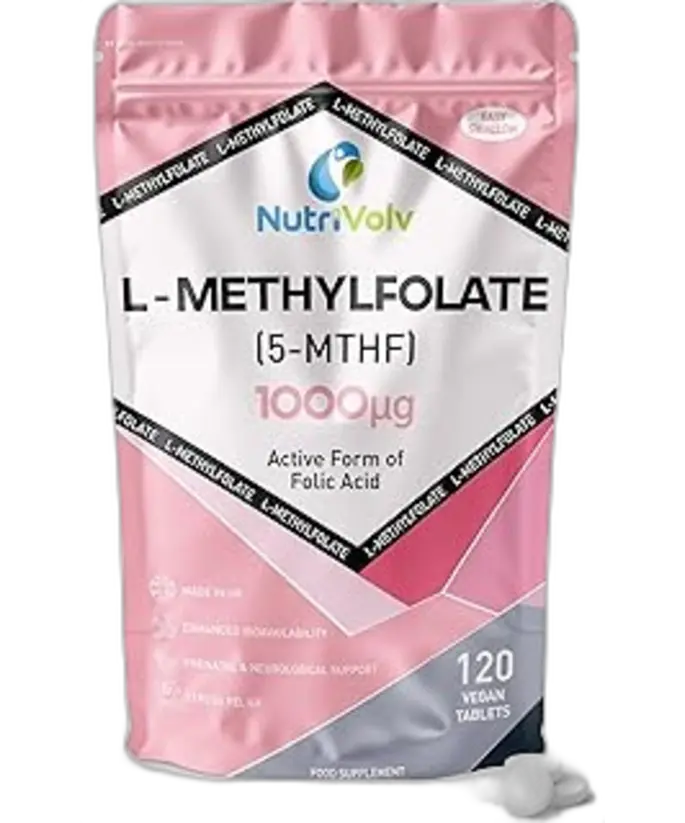
  • Uses L-Methylfolate 5-MTHF (active form)
  • Very affordable (under £7)
  • 120 tablets (4-month supply)
  • Small tablet size, easy to swallow

Cons

  • Contains magnesium stearate (flow agent)
  • Not a patented form (no clinical dossier)
  • Less established brand with limited testing data
  • No manufacturing certifications disclosed

The Bottom Line

At under £7 for a 4-month supply, NutriVolv is the cheapest active folate option on this list at roughly 6p per tablet. The ingredient is genuine 5-MTHF, so you are getting the right form.

The formula does include magnesium stearate, a common filler that cleaner brands avoid. The brand also shares very little about where it is manufactured or whether it is independently tested.

Best for: those who want to try active folate at the lowest possible price.

*Results and rankings are based on subjective opinion and do not necessarily reflect typical results from the use of these products. Please visit product website for more information.

CITATIONS

  1. https://pmc.ncbi.nlm.nih.gov/articles/PMC9380836/
  2. https://www.nhs.uk/pregnancy/keeping-well/vitamins-supplements-and-nutrition/
  3. https://pubmed.ncbi.nlm.nih.gov/25902009/
  4. https://www.ncbi.nlm.nih.gov/pmc/articles/PMC3847759/
  5. https://pubmed.ncbi.nlm.nih.gov/22311870/
  6. https://efsa.onlinelibrary.wiley.com/doi/abs/10.2903/j.efsa.2014.3893
  7. https://www.ncbi.nlm.nih.gov/pmc/articles/PMC4161975/