

The Best Krill Oil Supplements of 2026 for Heart, Brain & Joint Health

From quality and safety to ratings and reviews, find out which krill oil products we deemed best in class of 2026.

Antarctic krill oil supplement capsules with omega-3 benefits
Steph Baker - Registered Nutritionist
Reviewed by Steph Baker Registered MSc Nutritionist
Expert Reviewed

Stiff joints first thing in the morning. Brain fog that lingers past your second coffee. A general sense that something is just slightly off. These are signs your body may not be getting enough omega-3 fatty acids, or may not be absorbing the ones you are already taking. Whether you have never tried an omega-3 supplement or you have been taking fish oil for months without noticing a difference, the problem is rarely the omega-3s themselves. It is how they are delivered.

A study published in Lipids in Health and Disease found that omega-3s from krill oil may be absorbed up to 68% more efficiently than from standard fish oil. That matters, because low omega-3 status has been linked to stiff joints, poor concentration, low mood and sluggish cardiovascular function. A 2023 review in Nutrients estimated that over 70% of adults in the UK and Europe have suboptimal omega-3 levels.

The difference comes down to structure. Standard fish oil delivers EPA and DHA as triglycerides, which need multiple digestive steps before your body can use them. Krill oil delivers those same omega-3s bound to phospholipids, the same molecules that form every cell membrane in your body. This means your cells can absorb them more directly, without the extra digestive steps that standard fish oil requires. Krill oil also contains astaxanthin, a naturally occurring antioxidant that protects the omega-3s from oxidation.

The UK krill oil market is flooded with products that cut corners on phospholipid content, hide behind undisclosed extracts, and pad their capsules with bovine gelatine, sorbitol and artificial flavourings. We evaluated dozens of krill oil supplements to find the five that actually deliver on quality, transparency and value.

Your Top Krill Oil Questions Answered
Should I stop taking fish oil if I switch to krill oil? +

Yes. There is no need to take both at the same time. Krill oil provides the same key omega-3s (EPA and DHA) as fish oil, so doubling up is unnecessary and could mean you exceed your intended dose. Simply replace your fish oil with krill oil at the same time of day. Most people notice the transition is straightforward, with many reporting fewer digestive side effects such as fishy burps. If you take a prescribed omega-3 for a specific medical condition, speak to your GP before making any changes.

How much krill oil should I take daily? +

Most clinical studies use doses between 1,000mg and 2,000mg of krill oil daily. At this range, you can expect around 120 to 240mg EPA and 56 to 112mg DHA per day, depending on the product. Because phospholipid-bound omega-3s may be absorbed more efficiently than triglyceride-based fish oil, the effective dose is often lower than you might expect. A 1,000mg daily serving is a practical starting point for most adults.

How long does krill oil take to show results? +

General benefits such as reduced fishy burps and improved digestion are often noticed within the first few weeks. For cardiovascular and cognitive support, research published in Lipids in Health and Disease suggests that measurable changes in the Omega-3 Index typically occur after 4 to 8 weeks of consistent use. Joint comfort improvements may take longer, with some studies reporting benefits at 8 to 12 weeks. The key is daily consistency. Take your krill oil at the same time each day, ideally with food.

Is krill oil safe for long-term use? +

Krill oil has a well-established safety profile. Clinical trials lasting up to 12 weeks have not reported significant adverse effects at doses of 1,000 to 3,000mg daily. The most commonly noted side effect is mild gastrointestinal discomfort, which typically resolves within the first few days. Because krill oil may have mild blood-thinning properties, anyone taking anticoagulant medication such as warfarin should speak to their GP before starting supplementation.

Can I take krill oil if I have a shellfish allergy? +

This is an important question. Krill are crustaceans, which places them in the same biological group as prawns, crabs and lobsters. If you have a diagnosed shellfish allergy, most allergists recommend avoiding krill oil as a precaution. The allergenic protein tropomyosin, which triggers most crustacean allergies, has been identified in krill. That said, some people with mild shellfish sensitivities tolerate krill oil without issues, but this is not something to test on your own. Speak to your GP or allergist before trying krill oil if you have any history of shellfish allergy. Fish oil remains a safe alternative for omega-3 supplementation in these cases.

What Can Krill Oil Actually Do For You?

Heart and cardiovascular health. EPA is the omega-3 most closely associated with cardiovascular benefits. It contributes to the normal function of the heart (an EFSA-authorised claim at 250mg combined EPA and DHA daily). Research published in the Journal of the American Heart Association suggests that higher EPA intake may help maintain healthy blood lipid levels. Because krill oil's phospholipid structure supports more efficient absorption (as covered above), you may reach effective EPA levels at a lower dose than with standard fish oil.

Joint comfort and mobility. If you wake up with stiff knees or achy fingers, omega-3s may help. A 2022 clinical trial published in the American Journal of Clinical Nutrition found that krill oil supplementation at 2g daily was associated with improvements in knee joint comfort over 6 months. The benefits tend to build gradually. Most people notice a difference after 8 to 12 weeks of consistent use. This makes krill oil worth considering for anyone with age-related joint stiffness, regular exercisers, or those who spend long hours at a desk.

Brain and cognitive function. DHA makes up roughly 40% of the polyunsaturated fatty acids in your brain. It contributes to the maintenance of normal brain function (an EFSA-authorised claim at 250mg daily DHA). What makes krill oil particularly relevant here is that phospholipid-bound DHA may cross the blood-brain barrier more readily than triglyceride-bound DHA from fish oil. If you struggle with afternoon brain fog or feel your focus slipping, consistent omega-3 intake is one of the most well-researched nutritional strategies to consider.

Astaxanthin: a bonus you will not find in fish oil. Krill oil naturally contains astaxanthin, a carotenoid pigment that gives krill their reddish colour. Astaxanthin is a potent antioxidant. Research in Marine Drugs suggests it may support skin health, exercise recovery and protection against oxidative stress. It also serves a practical purpose: astaxanthin helps prevent the omega-3s in your capsule from oxidising, keeping the oil fresh without the need for artificial preservatives.

Research Suggests A Quality Krill Oil Supplement May:
  • Contribute to the normal function of the heart (EFSA-authorised claim)
  • Help maintain comfortable, mobile joints over time
  • Support normal brain function and mental clarity
  • Deliver natural astaxanthin for antioxidant protection
  • Supply choline for normal liver function and lipid metabolism

Choosing the Right Format For You

Even a high-quality krill oil can fall short if the format does not suit your routine. Each delivery method has trade-offs worth considering:

Softgel Capsules
Liquid Oil
Powder/Granules
Ease of Use Grab & go Measure daily Mix daily
Additives Risk Medium Higher
Omega-3 Retention ★★★★★ ★★★ ★★
Travel Friendly Messy Bulky
Best For Daily use Higher doses Smoothie blending

Our recommendation: Softgel capsules offer the best balance of convenience, omega-3 protection, and clean formulation. The sealed capsule shields the krill oil from oxidation and light, preserving its potency far better than liquid or powder formats. Softgels also eliminate the taste and odour issues that put many people off liquid omega-3s. The best format is the one you will take consistently.

What To Look For In A Krill Oil Supplement
High Phospholipid Content

Phospholipids are the absorption advantage we covered above, and they are the main reason to choose krill oil. Look for at least 400mg of phospholipids per serving. Products that do not disclose their phospholipid content are likely using lower-quality krill extract.

Branded Extract (Superba)

Superba is a trademarked krill oil extract backed by over 30 clinical studies. It guarantees consistent phospholipid levels, sustainable sourcing and rigorous quality testing. Generic "krill oil" can vary enormously in composition and purity.

MSC-Certified Sustainability

The Marine Stewardship Council (MSC) blue label is the gold standard for sustainable krill harvesting. MSC-certified fisheries take less than 1% of the total Antarctic krill biomass, ensuring minimal environmental impact. If a product does not carry this certification, question its sourcing.

Naturally Occurring Astaxanthin

Astaxanthin is a carotenoid antioxidant naturally present in krill. It protects the omega-3s from oxidation (keeping them fresh) and provides its own health benefits. Studies suggest astaxanthin may support skin health and exercise recovery. A good krill oil will list its astaxanthin content on the label.

Clean Formula & GMP Manufacturing

The best krill oil supplements avoid unnecessary fillers like titanium dioxide, magnesium stearate and artificial flavourings. Look for products manufactured in GMP-certified facilities with transparent ingredient lists and clear dosage information.

Money-Back Guarantee

A money-back guarantee signals that a brand stands behind its product. It removes the financial risk of trying a new supplement and gives you time to assess whether it works for you. Brands that offer 30 to 60-day guarantees tend to have higher-quality formulations, because they know most customers will not need to return the product.

What To Avoid In A Krill Oil Supplement
Bovine Gelatine Capsules

Some krill oil supplements use bovine gelatine capsules instead of marine or fish gelatine. This is unnecessary for a marine-sourced product and may be a sign of cost-cutting. Look for softgel capsules made from fish gelatine or other marine-derived materials for consistency and quality.

Artificial Flavourings & Sorbitol

Some brands add vanilla flavouring, ethyl vanillin or sorbitol to mask the taste of low-quality krill oil. A well-extracted, high-quality krill oil should not need flavour masking. These additives add nothing nutritionally and may cause digestive discomfort in sensitive individuals.

Misleading "1,000mg Krill Oil" Claims

Many brands advertise a headline dose of 1,000mg but require two capsules to reach it, with each capsule containing only 500mg. Others list total krill oil weight without breaking down the EPA, DHA and phospholipid content. Always check whether the stated dose is per capsule or per serving, and look for a full nutritional breakdown rather than a single headline number.

Titanium Dioxide & Unnecessary Coatings

Some krill oil softgels contain titanium dioxide or other opacifiers used to make the capsule look uniform. The EU restricted titanium dioxide as a food additive in 2022 following EFSA safety concerns. A quality krill oil capsule should be naturally red-orange from astaxanthin, not artificially coated to appear consistent.

Top 5 Krill Oil Supplements Of 2026

After extensive testing and research, these are the products that made our list.

B+ Overall Grade

Pros

  • 1,200mg per two-capsule serving
  • MSC-certified sustainable krill
  • Established, trusted UK brand
  • Contains phospholipids and astaxanthin

Cons

  • Higher price point (£46.99 for 60 capsules)
  • Lower dose per individual capsule (600mg)
  • Only 19 reviews with a 3.9-star average
  • Added vanilla flavouring

The Bottom Line

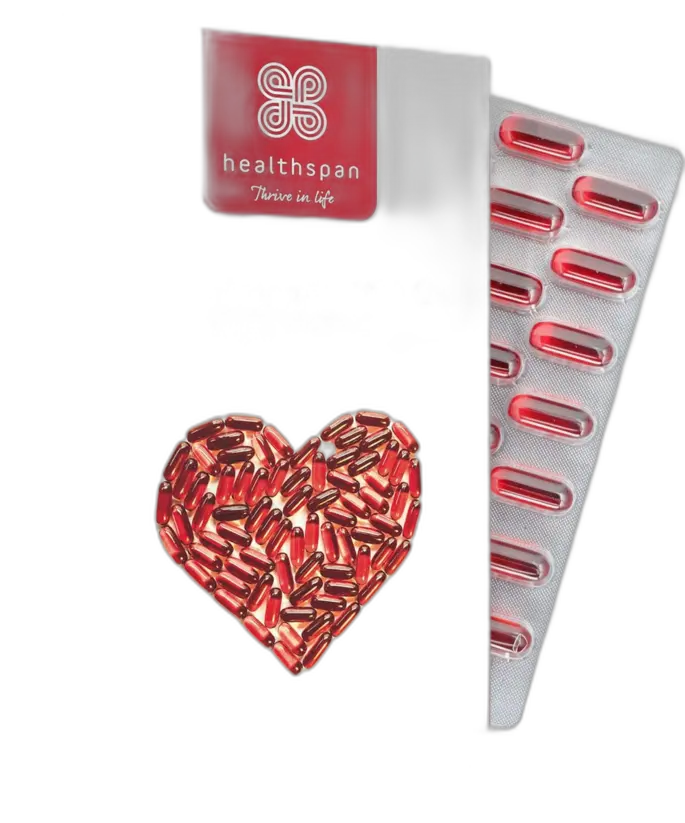
Healthspan is one of the most recognised supplement brands in the UK, and their krill oil reflects that reputation. The 1,200mg per two-capsule serving is among the highest on the market, and the MSC certification gives confidence in sustainability.

The main drawbacks are practical. At £46.99 for a 30-day supply, this is the most expensive product on our list. Each individual capsule only contains 600mg, so you need two daily. The addition of vanilla flavouring is an odd choice for a premium krill oil. It suggests the base product may benefit from taste masking.

Limited user reviews (just 19 at the time of writing) make it harder to gauge long-term satisfaction. A solid option from a trusted brand, but the premium price is difficult to justify when comparable quality is available for less.

Best for: those who want a high-dose krill oil from a trusted UK brand and are comfortable with the premium price.

*Results and rankings are based on subjective opinion and do not necessarily reflect typical results from the use of these products. Please visit product website for more information.
B Overall Grade

Pros

  • Well-established Irish brand
  • 1,180mg per two-capsule serving
  • Affordable price point (£23.99)
  • Widely available in pharmacies and online

Cons

  • Only 590mg per individual capsule
  • Contains fish gelatine and sorbitol
  • Phospholipid content not specified on label
  • No MSC certification listed

The Bottom Line

Cleanmarine has built a loyal following in the krill oil space, particularly in Ireland and the UK. At approximately £23.99, their affordable price point makes krill oil accessible to a wider audience, and the two-capsule serving delivers a reasonable 1,180mg.

However, there are trade-offs at this price. Each capsule contains just 590mg, meaning you need two for a full serving. The formula includes fish gelatine and sorbitol, additives that purists may prefer to avoid. The absence of MSC certification is notable, especially given the importance of sustainable krill harvesting.

A budget-friendly entry point to krill oil, best suited for those prioritising affordability over premium ingredients and certifications.

Best for: budget-conscious buyers who want an affordable introduction to krill oil.

*Results and rankings are based on subjective opinion and do not necessarily reflect typical results from the use of these products. Please visit product website for more information.
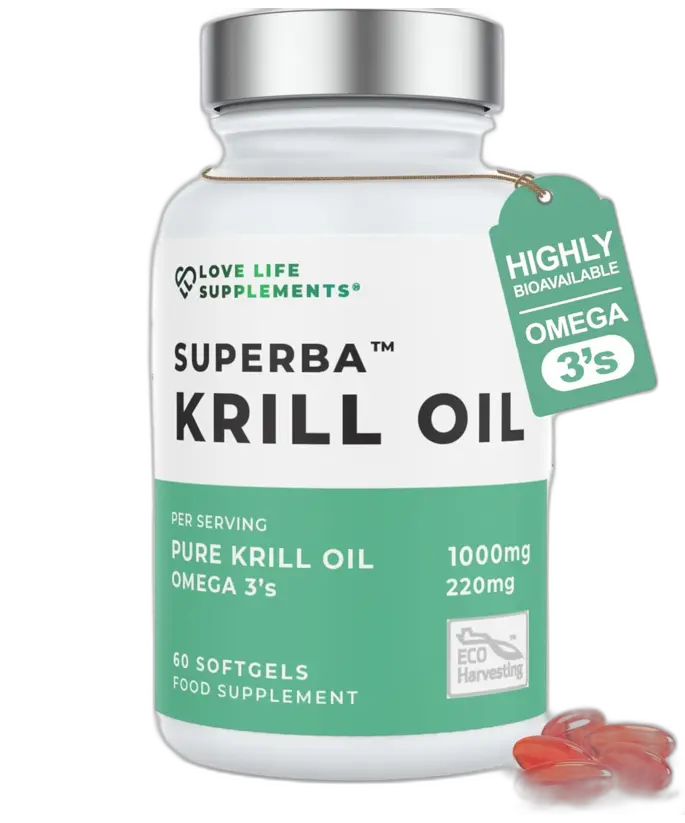
B Overall Grade

Pros

  • Uses Superba krill extract
  • 1,000mg per two-softgel serving
  • Contains phospholipids and astaxanthin
  • Competitive price (£35.95)

Cons

  • Each capsule only 500mg (requires 2 daily)
  • No additional supporting nutrients
  • Does not specify which generation of Superba extract is used
  • Limited brand recognition in the UK

The Bottom Line

Love Life Supplements offers a straightforward krill oil using the Superba extract, which is a positive sign for quality. At approximately £35.95, the 1,000mg serving delivers phospholipids and astaxanthin as expected from a Superba-based product.

The concern here is transparency. Each capsule contains just 500mg, so you need two softgels to reach the advertised 1,000mg dose. The listing does not clearly specify whether this is the newer Superba2 formulation or the original Superba1, which has a different phospholipid profile.

A competent krill oil at a fair price, but the lack of additional nutrients and limited brand information hold it back from the top spots.

Best for: those who want a straightforward, mid-range krill oil without additional nutrients.

*Results and rankings are based on subjective opinion and do not necessarily reflect typical results from the use of these products. Please visit product website for more information.
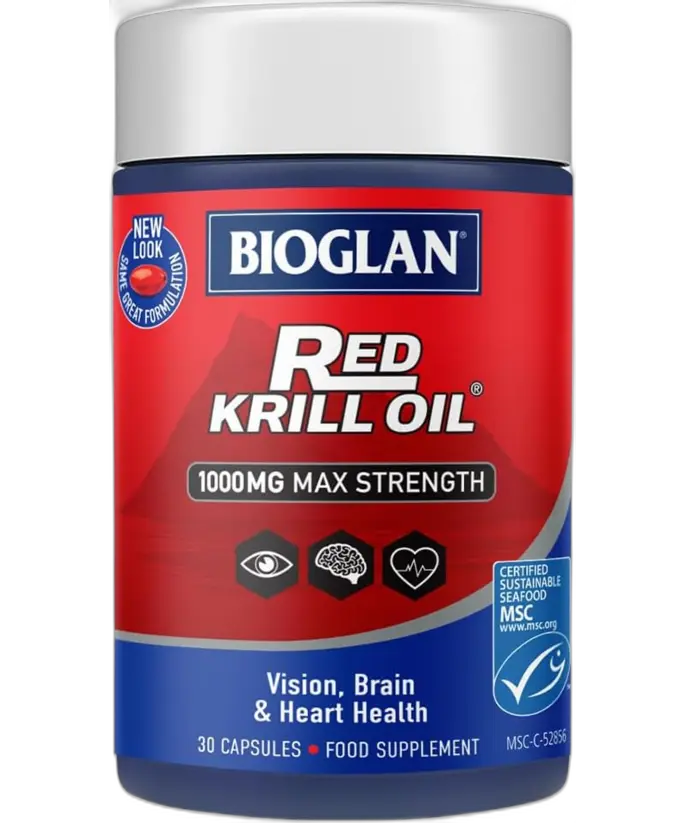
B- Overall Grade

Pros

  • 1,000mg per single capsule (one daily)
  • Convenient one-a-day dosing
  • Recognised high-street brand

Cons

  • Only 30 capsules per bottle (£1 per capsule)
  • Contains bovine gelatine and sorbitol
  • Ethyl vanillin artificial flavouring added
  • No MSC or Superba certification

The Bottom Line

Bioglan is a well-known pharmacy brand, and their Red Krill Oil has the advantage of a simple one-capsule-a-day format delivering 1,000mg. For those who value convenience above all else, that simplicity is appealing.

However, the formula has several drawbacks. At just 30 capsules for £30.11, you are paying roughly £1 per day, which is poor value compared to 60-capsule alternatives. The capsules contain bovine gelatine (unusual for a marine product), sorbitol and ethyl vanillin flavouring, all unnecessary additives.

The absence of both MSC sustainability certification and a branded extract like Superba means there is less assurance of quality and sourcing standards. Convenient, but compromised on formulation and value.

Best for: shoppers who prefer a recognisable high-street brand and prioritise convenience over potency.

*Results and rankings are based on subjective opinion and do not necessarily reflect typical results from the use of these products. Please visit product website for more information.

CITATIONS

  1. https://www.ncbi.nlm.nih.gov/pmc/articles/PMC4252213/
  2. https://pubmed.ncbi.nlm.nih.gov/25884846/
  3. https://www.ncbi.nlm.nih.gov/pmc/articles/PMC7692435/
  4. https://pubmed.ncbi.nlm.nih.gov/17353582/