The Best Psyllium Husk Supplements of 2026 for Digestion, Regularity & Gut Health

From quality and safety to ratings and reviews, find out which psyllium husk supplements we deemed best in class of 2026.

Natural psyllium husk supplement for digestive health
Steph Baker - Registered Nutritionist
Reviewed by Steph Baker Registered MSc Nutritionist
Expert Reviewed

The most boring supplement on the shelf might be the most underrated one in your medicine cabinet. Nobody gets excited about fibre. It is not trendy, not Instagram-worthy, and it will not promise to transform your life in seven days. But psyllium husk quietly does something few supplements can: it works on several parts of your digestive system at the same time.

The NHS recommends 30g of fibre daily. The average UK adult gets just 18g. That gap shows up in ways most people do not connect to fibre: bloating after meals, irregular bowel movements, fluctuating energy, and a gut that just feels off.

Psyllium husk is the outer coating of a plant seed and one of the most studied fibre supplements available. It absorbs up to 10 times its weight in water, forming a gel that supports regularity, feeds beneficial gut bacteria, and may help manage cholesterol and blood sugar. Few supplements offer that kind of range.

The problem? The UK psyllium market is flooded with products cut with sweeteners, artificial flavours, and fillers that undermine the very benefits you are seeking. We evaluated dozens of options to find the five that actually deliver.

Your Top Psyllium Husk Questions Answered
How much psyllium should I take daily? +

Most research uses doses between 5g and 10g of psyllium husk daily for digestive benefits. However, capsule supplements typically provide 1,000mg to 1,500mg per serving, which is a practical starting point. If you are new to fibre supplementation, begin with a lower dose and increase gradually over 1 to 2 weeks to allow your digestive system to adjust.

When is the best time to take psyllium husk? +

Morning or evening are equally effective for psyllium. The key is consistency. Take it with a full glass of water (at least 250ml) at the same time each day. Taking it 30 minutes before meals may help with appetite management. Avoid taking psyllium within 2 hours of other medications, as it may affect absorption.

Can psyllium husk help with IBS? +

Research published in Gut, the BMJ's specialist gastroenterology journal, suggests psyllium may help manage IBS symptoms, particularly for those with constipation-predominant IBS (IBS-C). Unlike insoluble fibre sources such as wheat bran, which can worsen symptoms, psyllium's soluble fibre is generally better tolerated. Always consult your GP before starting any new supplement for IBS.

Is psyllium safe to take long-term? +

Psyllium husk has a strong safety profile and has been used for decades as a dietary fibre supplement. Studies lasting 6 months or longer have not reported significant adverse effects when taken with adequate water. The key precaution is hydration: always take psyllium with at least 250ml of water, as taking it dry risks it swelling in the throat before reaching the stomach.

Does psyllium husk interact with medications? +

Psyllium may reduce the absorption of certain medications, including lithium, carbamazepine, and some diabetes medications. To minimise this risk, take psyllium at least 2 hours before or after other medicines. If you take prescription medication, speak to your GP or pharmacist before adding psyllium to your routine.

Why People Take Psyllium Husk

Psyllium is one of the most versatile fibre supplements available, with more clinical evidence behind it than most alternatives. Here is what the research supports.

Regularity and digestive comfort. Psyllium adds soft, hydrated bulk to stool, supporting comfortable bowel movements without the cramping that harsh insoluble fibres like wheat bran can cause. It is one of the most commonly recommended supplements for anyone dealing with constipation or irregularity.

Cholesterol support. EFSA has approved the claim that psyllium husk may help maintain healthy cholesterol levels. The gel it forms binds to cholesterol in the gut before it reaches the bloodstream, making psyllium one of the few fibre supplements with a recognised health claim.

Blood sugar management. Psyllium slows the absorption of sugars after meals, helping to reduce the spikes and crashes that can follow eating. Research suggests this may be particularly useful for those monitoring their blood sugar levels.

Gut health. Beneficial gut bacteria feed on psyllium, producing compounds that help keep your intestinal lining healthy. This prebiotic effect means psyllium does not just pass through your system. It actively supports the environment it travels through.

Research Suggests A Quality Psyllium Supplement May:
  • Support healthy, regular bowel movements and digestive comfort
  • Help maintain healthy cholesterol levels (EFSA-approved claim)
  • Feed beneficial gut bacteria as a prebiotic fibre source
  • Support a healthy blood sugar response after meals
  • Top up daily fibre intake without dietary overhaul

Choosing the Right Format For You

Even the purest psyllium can fail you if the format does not fit your routine. Each delivery method has trade-offs worth considering:

Powder
Capsules
Granules
Ease of Use Mix daily Grab & go Mix daily
Texture Gritty Sandy
Fibre Per Serve ★★★★★ ★★★ ★★★★
Travel Bulky Sachets
Additives Often Rare Usually
Best For High doses Daily use Taste-sensitive

Our recommendation: Capsules offer the best balance of convenience, clean formulation, and consistency. Powders deliver more fibre per serving and suit those who want higher doses, while granules can work well for people who prefer sachets. That said, capsules avoid the taste and texture issues that cause many people to abandon fibre supplements within weeks. The best format is the one you will take consistently.

What To Look For In A Psyllium Husk Supplement
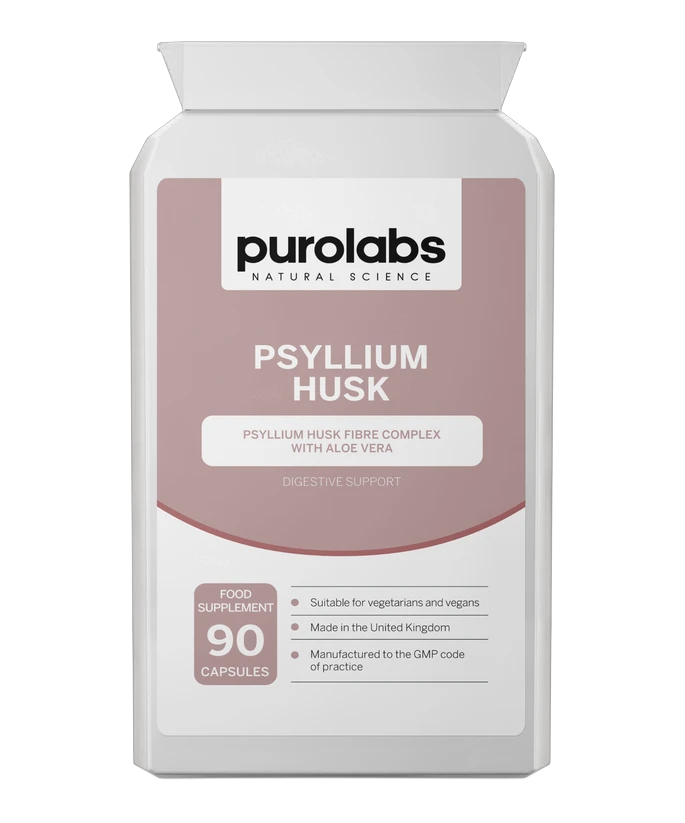
99%+ Purity "Blonde" Psyllium Husk

Psyllium purity varies enormously between brands. "Blonde" psyllium refers to husk carefully separated from the darker seed material and cleaned to 99% purity or higher. This grade delivers the highest soluble fibre concentration per gram. Dry-processed formulas also retain more of the natural mucilage that creates the beneficial gel in your gut.

Aloe Vera or Soothing Botanicals

Psyllium alone addresses the fibre gap, but the best formulas pair it with ingredients that support the broader digestive system. Aloe vera extract has been studied for its soothing properties on the gut lining, making it a useful addition for anyone with a sensitive stomach or IBS tendencies. A combined formula offers more complete digestive support than psyllium in isolation.

Vegan-Friendly Capsule Format

Vegetable cellulose (HPMC) capsules are the cleanest delivery format for psyllium. They eliminate the taste and texture issues that cause many people to abandon powder products within weeks, and they are suitable for vegans. Check that the capsule shell is HPMC rather than gelatin, as some brands still use animal-derived gelatin capsules that are not suitable for vegetarians or vegans.

Made in the UK to GMP Standards

Psyllium is a natural product whose quality varies by batch and source region. Products manufactured in GMP-certified UK facilities are subject to rigorous quality controls and independent testing, giving you the strongest assurance that purity claims on the label are accurate. For a supplement where purity directly determines efficacy, UK manufacturing matters.

Money-Back Guarantee

Digestive supplements take time to show results, and individual responses vary. A 60-day money-back guarantee signals that the brand stands behind the product's efficacy and is not relying on one-time purchases. It also removes the financial risk from trying a new supplement, which is especially important if you have previously had mixed results with fibre products.

What To Avoid In A Psyllium Husk Supplement
Artificial Sweeteners and Added Sugars

Many best-selling fibre powders rely on artificial sweeteners like aspartame and sucralose to improve palatability. A 2014 study in Nature found that artificial sweeteners may alter gut microbiome composition, potentially undermining the prebiotic benefits of the fibre itself. Other products use added sugars instead, which introduces unnecessary calories. For a supplement taken specifically to support gut health, sweeteners and sugars are a counterproductive trade-off.

No Actual Psyllium in the Formula

Some products marketed as fibre supplements contain no psyllium at all, using flax, chia, sprouted grains, or inulin as primary sources instead. These ingredients have nutritional value, but they do not replicate psyllium's gel-forming action in the gut or its studied effects on regularity and cholesterol. If psyllium is your goal, always check the ingredients list first.

Undisclosed Purity Grade

If a brand does not state purity on the label or product page, the psyllium has almost certainly not been cleaned to a high grade. Lower-purity psyllium contains more inert seed material and less soluble fibre per gram, meaning you need to take more to get the same effect. Reputable brands specify purity levels (95%+) clearly, because it is a meaningful differentiator.

Unnecessary Fillers and Additives

Some psyllium supplements bulk out their formulas with fillers like titanium dioxide, magnesium stearate, maltodextrin, or silicon dioxide. These are not harmful in small amounts, but they take up space that could be used for active ingredients and are unnecessary in a well-formulated product. A clean formula should list psyllium husk and a natural carrier like rice flour, with minimal additional ingredients.

Top 5 Psyllium Husk Supplements Of 2026

After extensive testing and research, these are the products that made our list.

B+ Overall Grade

Pros

  • Unique 3-in-1 formula: psyllium husk, live bacteria, and inulin
  • 5 strains of live bacteria for probiotic support
  • Well-established UK brand with a loyal following
  • Prebiotic inulin feeds beneficial gut bacteria
  • Higher fibre dose per serving than most capsule products

Cons

  • Powder format only, requires daily mixing
  • Gritty texture that some users find challenging to maintain long-term

The Bottom Line

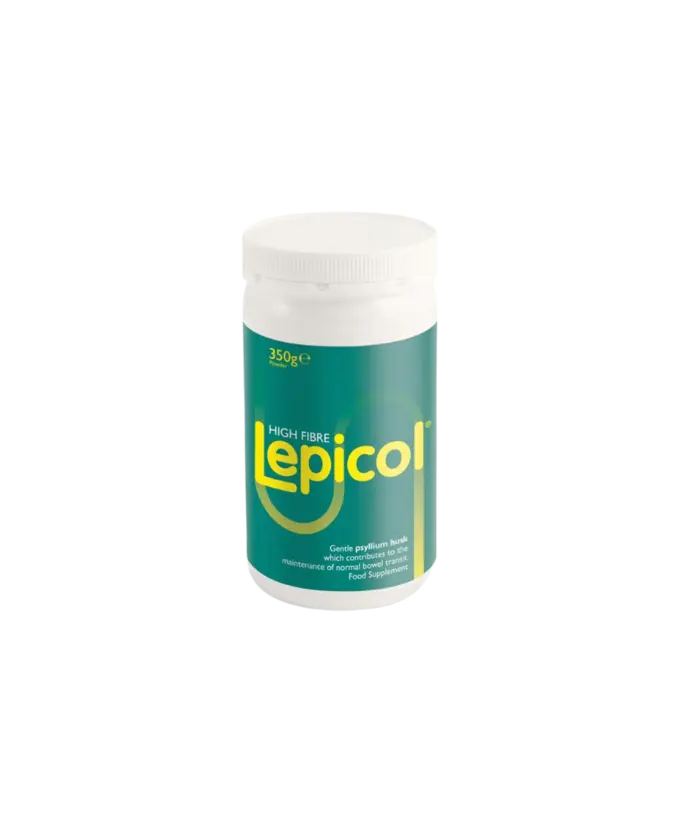
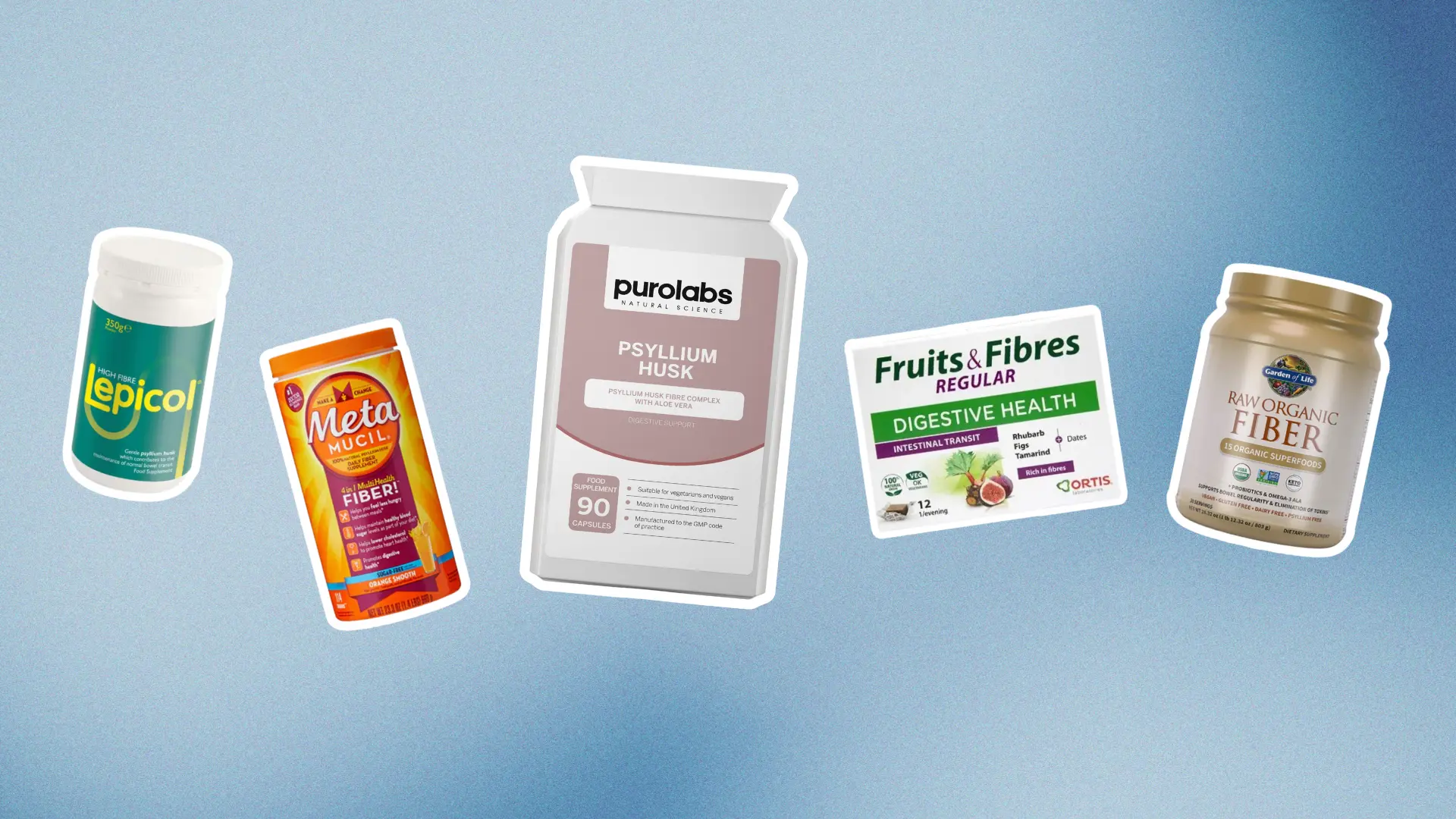
Lepicol has earned its reputation as one of the UK's most trusted digestive health brands. Their 3-in-1 formula is genuinely innovative, combining psyllium husk with 5 probiotic strains and prebiotic inulin in a single product. At around £14-16 per 180g tub, the value is fair for a multi-action formula.

The main consideration is practical: Lepicol is a powder-only product that requires daily mixing with water, and the texture takes some getting used to. That said, if you are already comfortable with powder supplements and want fibre plus probiotic support in one product, Lepicol is a genuinely effective option.

Best for: Those wanting both probiotic and fibre benefits in one product who are comfortable with daily powder mixing.

*Results and rankings are based on subjective opinion and do not necessarily reflect typical results from the use of these products. Please visit product website for more information.

B Overall Grade

Pros

  • One of the most recognised fibre brands globally
  • 2.4g soluble fibre per serving
  • Backed by decades of clinical research
  • Orange flavour improves palatability for better daily adherence
  • Sugar-free formula available

Cons

  • Contains artificial sweeteners (aspartame in sugar-free version)
  • Artificial orange flavouring and colourings
  • Powder only, requires mixing with water

The Bottom Line

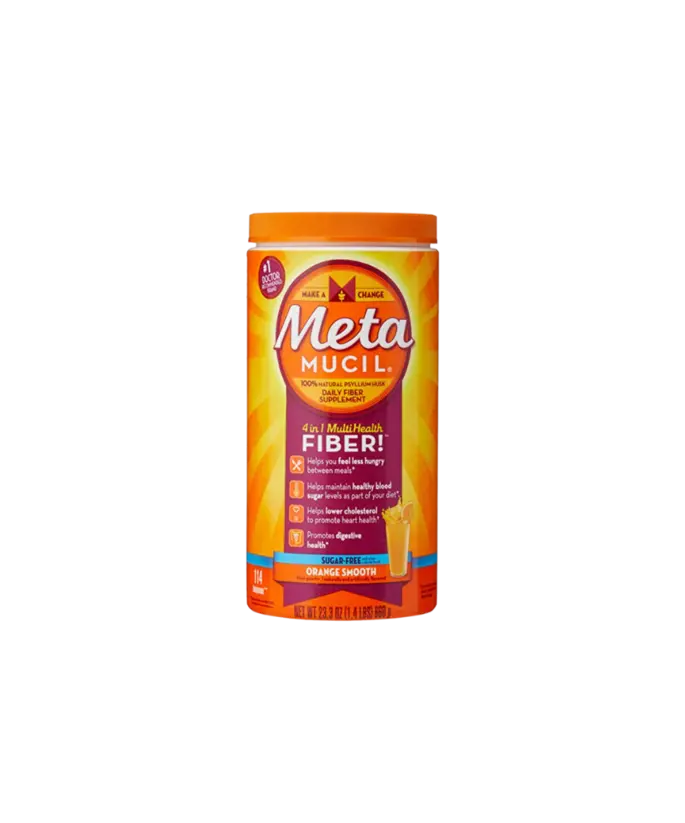
Metamucil is arguably the most trusted fibre supplement brand in the world, and for good reason. Backed by over 80 clinical studies, their psyllium-based formula delivers genuine results for regularity, cholesterol support, and blood sugar management. The orange flavouring makes the powder far more palatable than unflavoured psyllium, which genuinely helps with long-term adherence.

The trade-off is that the sugar-free version contains aspartame and artificial flavourings, which may not suit those seeking a clean-label supplement. At around £25-30 for 72 doses, the value per serving is competitive, and for many people the improved taste makes the difference between sticking with a fibre routine and abandoning it.

Best for: Those who prioritise brand trust and palatability, and want a clinically backed fibre powder they will actually enjoy taking daily.

*Results and rankings are based on subjective opinion and do not necessarily reflect typical results from the use of these products. Please visit product website for more information.

C+ Overall Grade

Pros

  • Unique chewable cube format, no water needed
  • Natural fruit ingredients: rhubarb, fig, and tamarind
  • Pleasant fruity taste with good compliance
  • Belgian brand with strong European heritage

Cons

  • Not a pure psyllium formula (fruit-based fibre blend)
  • Contains added sugars to achieve taste
  • Lower soluble fibre content per serving than psyllium capsules

The Bottom Line

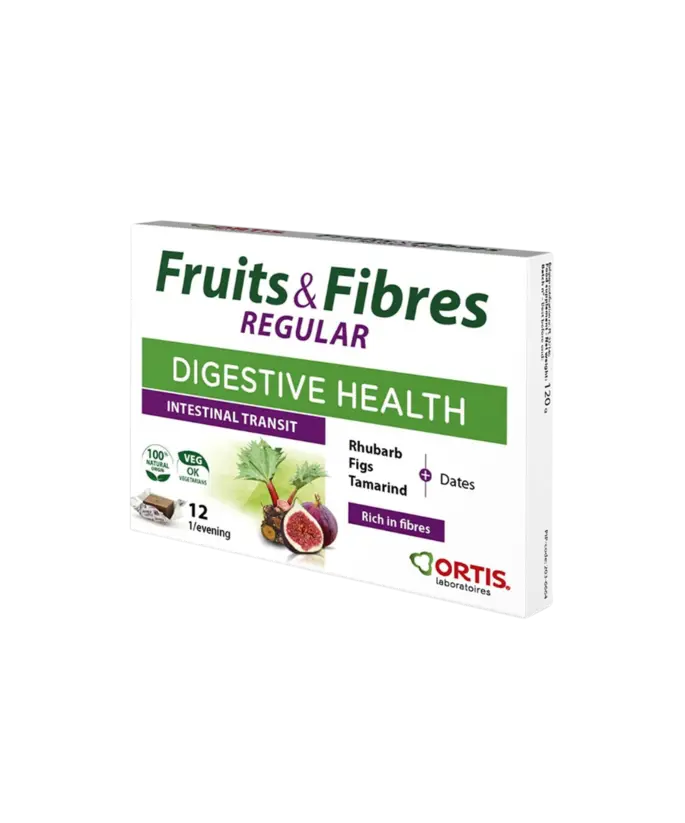
Ortis takes a genuinely creative approach to fibre supplementation. Their chewable fruit and fibre cubes, made with rhubarb, fig, and tamarind, are the most enjoyable product on this list to consume. For anyone who has tried and abandoned traditional fibre supplements due to taste or texture, Ortis solves that problem entirely.

These are not a pure psyllium product, so you will not get the same gel-forming soluble fibre that clinical studies have linked to cholesterol and blood sugar benefits, and the cubes do contain added sugars. At around £12-15 per box of 24 cubes, the cost per serving is higher than capsule or powder alternatives. That said, a fibre supplement you actually look forward to taking is far more valuable than one that sits unopened in a cupboard.

Best for: Those who have struggled with every other supplement format and want a genuinely palatable entry point to fibre supplementation.

*Results and rankings are based on subjective opinion and do not necessarily reflect typical results from the use of these products. Please visit product website for more information.

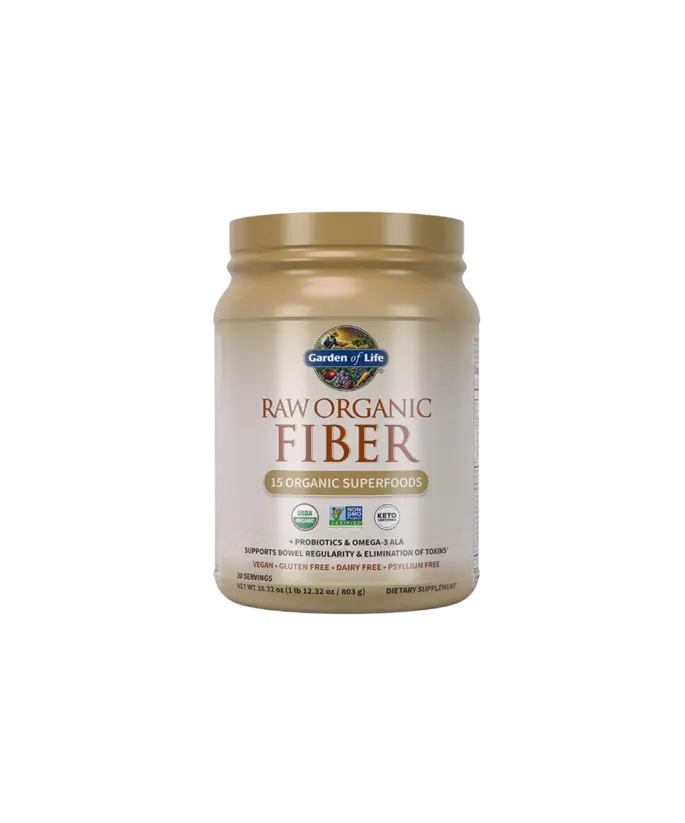
C Overall Grade

Pros

  • Certified organic with 15 raw superfoods
  • Includes probiotics and omega-3 ALA
  • Non-GMO, gluten-free, vegan-friendly
  • Respected brand with strong clean-label credentials

Cons

  • Contains no psyllium husk (uses flax, chia, and other fibre sources)
  • Very expensive at approximately £30-35 for 268g (around 30 servings)
  • Powder format with a strong grassy taste

The Bottom Line

Garden of Life has built one of the most respected brands in the organic supplement space, and their Raw Organic Fibre is a genuinely impressive nutritional product. The blend of 15 raw superfoods, probiotics, and omega-3s goes well beyond simple fibre supplementation, and the certified organic credentials are among the strongest in the market.

The important caveat is that this product contains no psyllium husk. Its fibre comes from flax seeds, chia seeds, and sprouted grains, which offer their own nutritional benefits but do not replicate the specific gel-forming action of psyllium. At approximately £30-35 per tub, it is a premium investment, but for those who want a broad-spectrum organic fibre blend rather than targeted psyllium support, it is one of the best options available.

Best for: Consumers who prioritise certified organic, multi-nutrient formulation and want a comprehensive fibre blend rather than targeted psyllium effects.

*Results and rankings are based on subjective opinion and do not necessarily reflect typical results from the use of these products. Please visit product website for more information.

CITATIONS

  1. https://pubmed.ncbi.nlm.nih.gov/30681787/ (Psyllium supplementation and bowel regularity, J Clinical Gastroenterology, 2019)
  2. https://www.ncbi.nlm.nih.gov/pmc/articles/PMC6358997/ (Dietary fibre and gut microbiome diversity)
  3. https://pubmed.ncbi.nlm.nih.gov/29378044/ (Psyllium husk and cholesterol reduction, meta-analysis)
  4. https://gut.bmj.com/content/66/8/1381 (Psyllium for IBS symptom management, BMJ Gut)
  5. https://www.thelancet.com/journals/lancet/article/PIIS0140-6736(18)31809-9/ (Dietary fibre intake and mortality risk, The Lancet, 2019)
  6. https://www.nature.com/articles/nature13793 (Artificial sweeteners and gut microbiota, Nature, 2014)
  7. https://pubmed.ncbi.nlm.nih.gov/28639479/ (Short-chain fatty acids and intestinal health)