

The Best Glucosamine Supplements of 2026 for Joint Health & Mobility

From quality and safety to ratings and reviews, find out which glucosamine supplements we deemed best in class of 2026.

Active person enjoying mobility and joint comfort
Steph Baker - Registered Nutritionist
Reviewed by Steph Baker Registered MSc Nutritionist
Expert Reviewed

You feel it first thing in the morning. Stiff knees on the stairs. A dull ache in the hips after a walk. That grinding catch when you bend down to tie a shoe. For millions of adults in the UK, joint discomfort is not a single event. It is a slow erosion of the things you used to do without thinking.

The culprit is cartilage, the smooth, rubbery tissue that cushions every joint in your body. But here is the part most people never learn: cartilage has no blood supply. Unlike muscle or skin, it cannot tap into your bloodstream for nutrients. Everything it needs must reach it slowly through the fluid surrounding the joint. That makes getting the right nutrients to your cartilage the single biggest challenge in joint health.

Your body produces its own glucosamine, one of the key building blocks of cartilage. But production slows with age, exactly when wear and tear accelerates. Supplementing can help bridge that gap, yet most glucosamine products on UK shelves use a cheaper form that the body struggles to absorb. The difference between a supplement that works and one that does not often comes down to two things on the label: the form and the dose.

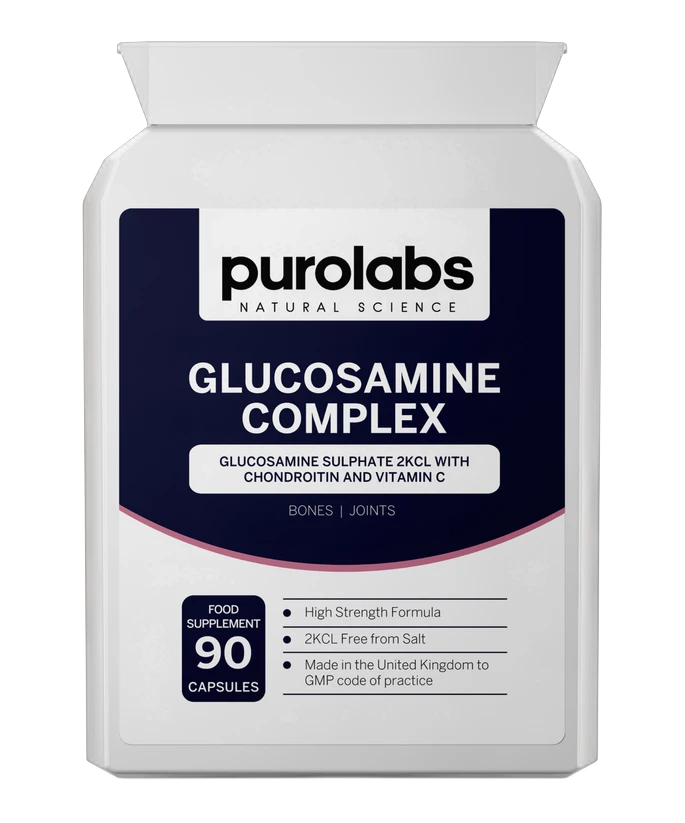
We reviewed dozens of glucosamine products across the UK market, comparing absorption, dosing, supporting ingredients, and manufacturing standards. These are the five that stood out.

Your Top Glucosamine Questions Answered
What dose of glucosamine do I actually need? +

Most clinical studies used 1,500mg of glucosamine sulphate daily. That is the dose consistently linked to joint health benefits. However, many supplements on UK shelves provide only 500mg per tablet, requiring two or three daily to reach that threshold. Always check the "per serving" amount rather than the "per capsule" figure, as these are often different.

Sulphate or HCL: which form is better? +

Glucosamine sulphate 2KCL has the most clinical research behind it. The "2KCL" means it is stabilised for better shelf life and absorption. Glucosamine HCL is another common form, but it lacks the sulphate component that researchers believe supports cartilage health. For joint-specific benefits, the evidence consistently favours the sulphate form.

How long before I notice a difference? +

Glucosamine is not a painkiller. It works by supporting cartilage maintenance, so most clinical trials assessed results after 8 to 12 weeks of daily use. Some people report earlier improvements, but the mechanism is gradual. Consistency matters more than dose timing, so take it at whatever point in the day you are most likely to remember.

Is glucosamine safe to take long-term? +

Studies lasting up to three years have shown glucosamine to be well-tolerated with minimal side effects. Most adults can take it indefinitely. Two groups should exercise caution: those with shellfish allergies (most glucosamine is derived from shellfish shells, though vegan alternatives exist) and people taking blood-thinning medication (glucosamine may affect how the blood clots). Consult your GP if either applies to you.

Do I need chondroitin and vitamin C as well? +

Glucosamine on its own can still be beneficial, but research increasingly supports combining it with chondroitin and vitamin C for better results. Chondroitin helps cartilage stay flexible, and vitamin C is essential for collagen production, which keeps cartilage strong. A formula that includes all three saves you buying them separately and ensures the doses work well together.

Why People Take Glucosamine

Joint cartilage wears down faster than it rebuilds. Unlike skin or bone, cartilage has no blood supply, so it heals very slowly. After age 30, wear and tear gradually outpaces repair. This is not a disease. It is normal ageing, and it is the main reason people start looking for joint support.

Your body makes less glucosamine as you get older. Glucosamine is one of the building blocks your body uses to maintain cartilage. As natural production slows down, a supplement can help bridge the gap. Research suggests that the sulphate form (specifically glucosamine sulphate 2KCL) has the strongest evidence for supporting joint health over time.

Glucosamine works best with the right supporting nutrients. Vitamin C contributes to normal collagen formation, which matters because cartilage is mostly collagen. Chondroitin helps cartilage retain water and stay flexible. A formula combining all three supports your joints from multiple angles, rather than relying on one ingredient alone.

Research Suggests A Quality Glucosamine Supplement May:
  • Support the structural integrity of joint cartilage
  • Provide raw materials your cartilage needs to maintain its structure
  • Contribute to normal collagen formation for cartilage (via vitamin C, EFSA-approved)
  • Help maintain joint mobility and comfort over time
  • Support an active lifestyle as part of a long-term joint health routine

Choosing The Right Format For You

Once you have settled on the right glucosamine formula, the next decision is how you want to take it. Capsules, tablets, and liquids each come with trade-offs worth understanding:

Capsules
Tablets
Liquid
Absorption ★★★★★ ★★★ ★★★★
Clean Formula Binders needed Sweeteners
Convenience Grab & go Grab & go Measuring
Dose Accuracy Precise Precise Varies
Best For Daily joint support Budget option Pill-averse

Our recommendation: Capsules offer the best balance of absorption, clean formulation, and convenience. Tablets need extra ingredients to hold their shape, and liquids often contain sweeteners and preservatives. The best format is the one you will take consistently.

What To Look For In A Glucosamine Supplement
Glucosamine Sulphate 2KCL

Not all glucosamine is the same. The sulphate 2KCL form has the strongest research behind it for joint health, and it is stabilised for better absorption. Many cheaper products use HCL instead, which lacks the sulphate component. Check that the daily serving provides a meaningful dose, not just the per-capsule amount.

Vitamin C

Cartilage is mostly made of collagen, and your body needs vitamin C to produce it. Without enough vitamin C, cartilage cannot maintain its structure properly. Surprisingly, many glucosamine supplements leave it out entirely, which means you would need to take it separately.

Chondroitin Sulphate

Chondroitin is found naturally in cartilage and helps it hold onto water, keeping it flexible and cushioned. Research suggests it works well alongside glucosamine, which is why studies increasingly test the two together rather than glucosamine alone. A formula combining glucosamine, chondroitin, and vitamin C covers joint health from three different angles.

Made in the UK

UK-manufactured supplements are produced under GMP (Good Manufacturing Practice) standards, which means stricter quality controls than many imported products. Look for brands that also test their finished products independently, so you know what is on the label matches what is in the capsule.

Money-Back Guarantee

Cartilage repairs slowly because of that limited nutrient supply. Most clinical trials assessed glucosamine over 8 to 12 weeks, yet many products offer no refund if it does not work for you. A genuine money-back guarantee (60 days or more) signals that the brand stands behind the formula and gives you enough time to assess whether it is delivering any benefit.

What To Avoid In A Glucosamine Supplement
Multi-Tablet Serving Sizes

Several popular glucosamine products require three tablets daily to reach the studied dose. A 180-tablet bottle sounds generous until you realise it is only a 60-day supply at that rate. Simpler once or twice-daily dosing is both more honest on value and better for long-term adherence.

Synthetic Bulking Agents and Fillers

Many glucosamine supplements contain fillers like titanium dioxide, silicon dioxide, and maltodextrin. These are added to speed up manufacturing and reduce costs, but they take up space in the capsule that could go to active ingredients. Look for a short, transparent ingredient list with minimal extras.

Kitchen-Sink Formulas

Some glucosamine products list 10 or more ingredients (MSM, turmeric, hyaluronic acid, boswellia, collagen) at token doses. This "everything but the kitchen sink" approach spreads the budget across too many ingredients without delivering clinical amounts of any. Research supports glucosamine sulphate at 1,500mg, chondroitin, and vitamin C as the core trio. Extra ingredients at sub-clinical doses add label appeal without meaningful benefit.

Proprietary Blends and Hidden Doses

Some products hide behind proprietary blend labels that list ingredients without revealing individual amounts. If you cannot see the exact dose of glucosamine, chondroitin, or vitamin C, you have no way to verify whether the product matches clinical research. Transparency is not a luxury feature. Any reputable brand should disclose full dosages on the label.

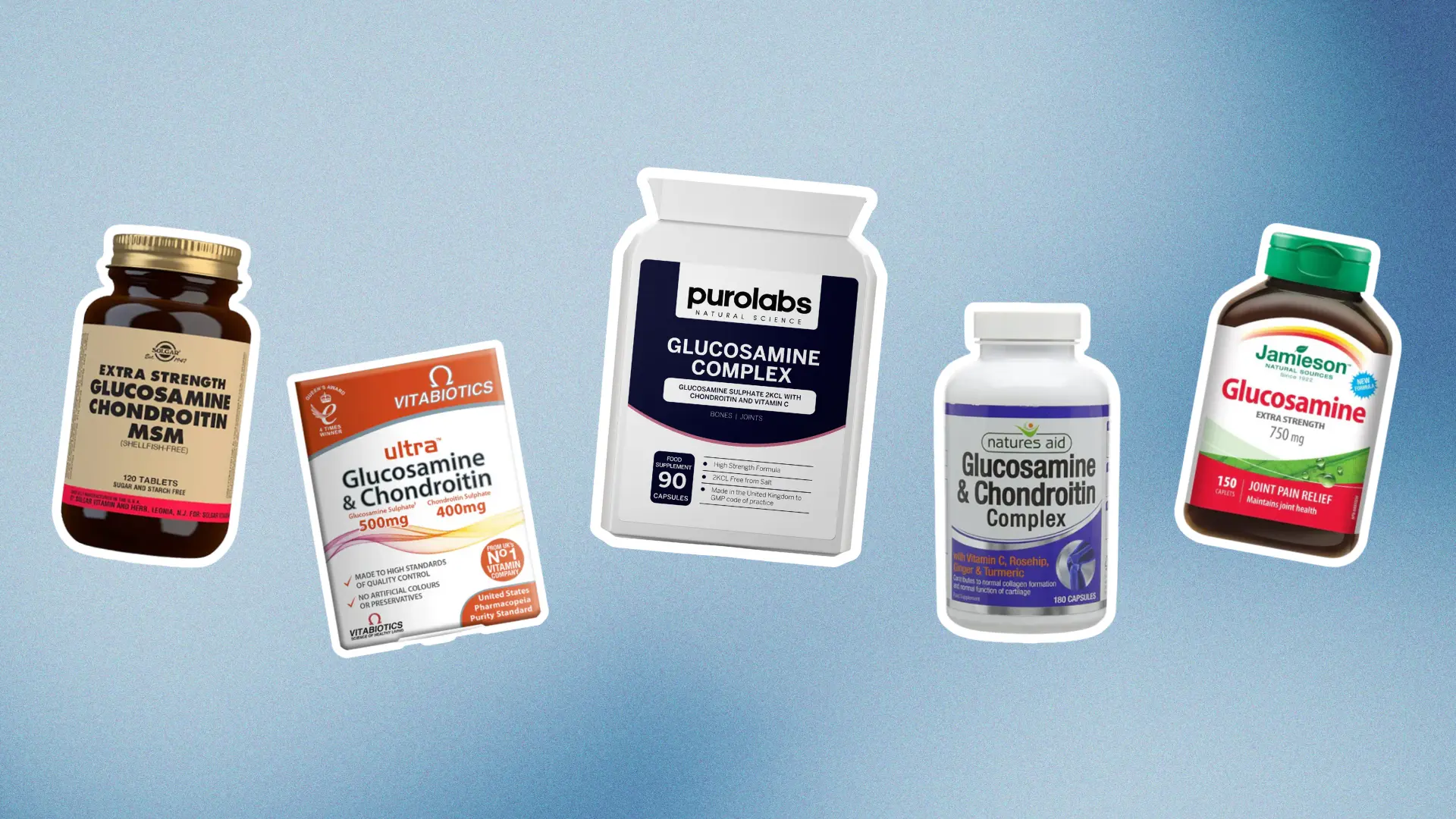
Top 5 Glucosamine Supplements Of 2026

After extensive testing and research, these are the products that made our list.

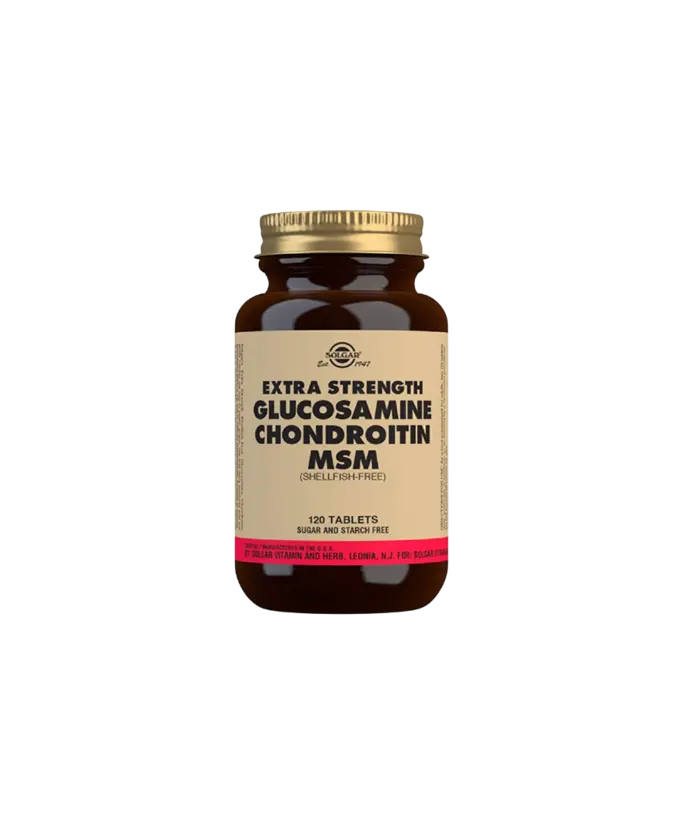
B+ Overall Grade

Pros

  • Trusted heritage brand with 75+ years in supplements
  • Triple-action formula: glucosamine, chondroitin, and MSM
  • Shellfish-free glucosamine source (suits allergy sufferers)
  • Free from gluten, wheat, dairy, and soya
  • Well-regarded quality control and testing standards

Cons

  • Uses glucosamine HCL rather than the sulphate 2KCL form
  • No vitamin C included for collagen support
  • Large tablets may be difficult to swallow

The Bottom Line

Solgar is a well-known supplement brand with a long history, and this formula combines glucosamine, chondroitin, and MSM in one tablet. MSM is a natural sulphur compound that research suggests may support joint and connective tissue health. The shellfish-free formulation also makes it one of the few options available if you have a shellfish allergy.

The main trade-off is the form. Solgar uses glucosamine HCL rather than the sulphate 2KCL form that has stronger research behind it for joints. The formula also lacks vitamin C, so you would need to get that separately. The tablets are large, which some people find difficult to swallow. At £40-50 per bottle, it is one of the more expensive options in this roundup.

Best for: people with shellfish allergies who need a glucosamine option with MSM.

*Results and rankings are based on subjective opinion and do not necessarily reflect typical results from the use of these products. Please visit product website for more information.
B Overall Grade

Pros

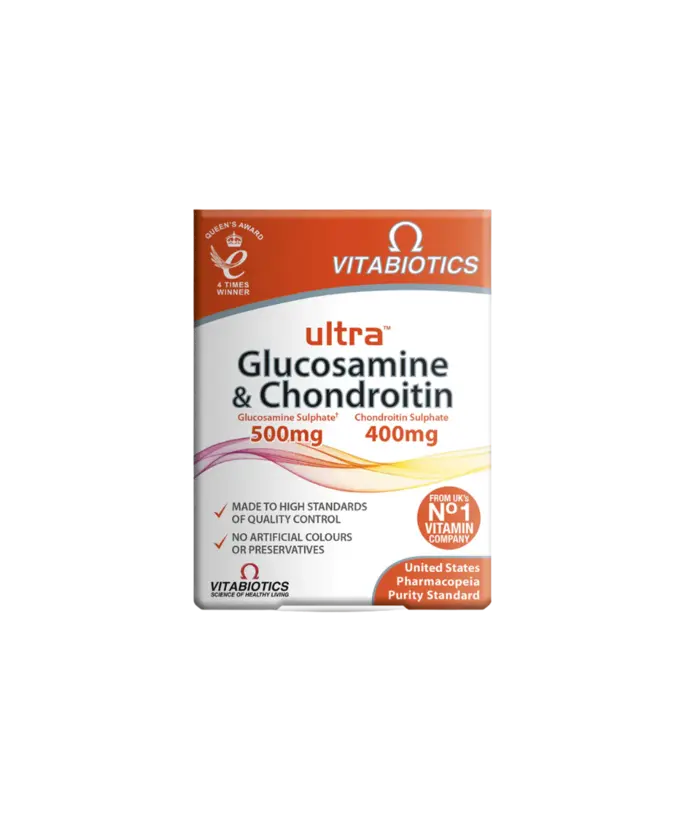
  • UK's #1 vitamin company by market share
  • Ingredients meet recognised purity standards
  • Includes turmeric and ginger extracts for added support
  • Available in Boots, Superdrug, and most supermarkets
  • Includes vitamin C and zinc alongside glucosamine

Cons

  • Glucosamine dose lower than focused formulas
  • Multi-ingredient formula may dilute each active
  • Contains shellfish and fish derivatives

The Bottom Line

Vitabiotics dominates UK pharmacy shelves for a reason. Jointace Original combines glucosamine and chondroitin with vitamin C, zinc, turmeric, and ginger extracts, all meeting recognised purity standards. The breadth of the formula is genuinely impressive for a high-street product.

The downside of breadth is depth. With so many active ingredients competing for space in a two-tablet serving, the glucosamine dose is lower than dedicated formulas. You get more variety, but less of each individual ingredient.

If you want to pick up a joint supplement during your weekly shop without researching online, Jointace is the best option on the shelf. For targeted, high-dose glucosamine supplementation, more focused products score higher.

Best for: shoppers who want a multi-ingredient joint formula from a trusted high-street brand.

*Results and rankings are based on subjective opinion and do not necessarily reflect typical results from the use of these products. Please visit product website for more information.
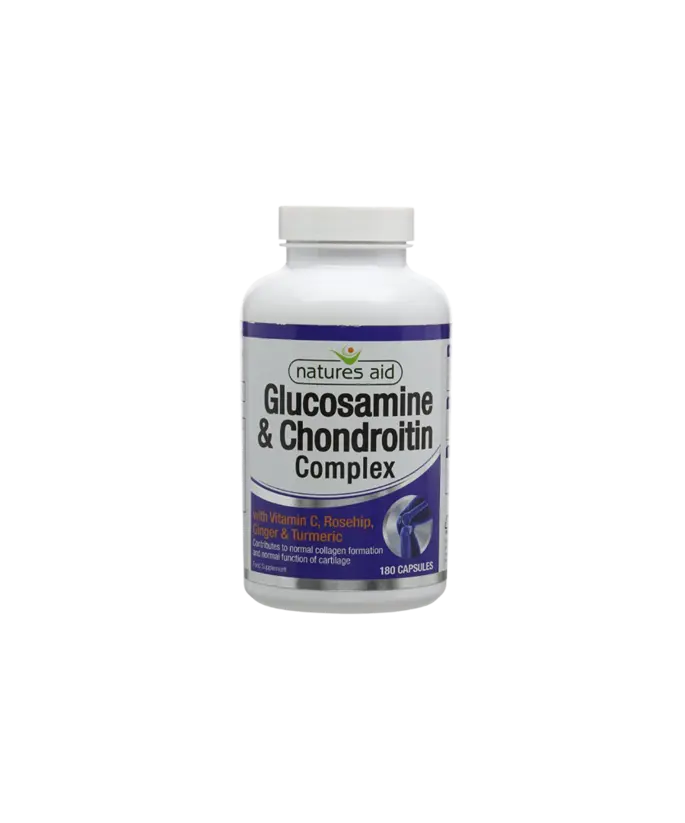
C+ Overall Grade

Pros

  • UK manufactured to pharmaceutical GMP standards
  • Uses the preferred glucosamine sulphate 2KCL form
  • Includes vitamin C and MSM alongside glucosamine
  • Large 180-tablet packs offer good shelf value
  • Non-GMO and gluten-free certified

Cons

  • Requires 3 tablets daily to reach the studied 1,500mg dose
  • Chondroitin sourced from shark cartilage
  • Contains soya lecithin (relevant for soya sensitivities)

The Bottom Line

Nature's Aid is a well-established UK manufacturer with a genuine commitment to pharmaceutical-grade production. Crucially, this is one of the few competitors that uses the glucosamine sulphate 2KCL form, the same form with the strongest clinical evidence. It also includes vitamin C and MSM, making it one of the more complete formulas in this roundup.

The catch is the dosing. Each tablet contains only 500mg glucosamine, so the full serving requires three tablets daily. At that rate, a 180-tablet bottle lasts two months, not the six months the pack size might suggest. Factor that in when comparing on price.

The shark-derived chondroitin may be a concern for environmentally conscious buyers. It also contains soya lecithin, which rules it out for those with soya sensitivities.

Best for: buyers who prioritise the 2KCL form and do not mind a three-tablet daily routine.

*Results and rankings are based on subjective opinion and do not necessarily reflect typical results from the use of these products. Please visit product website for more information.
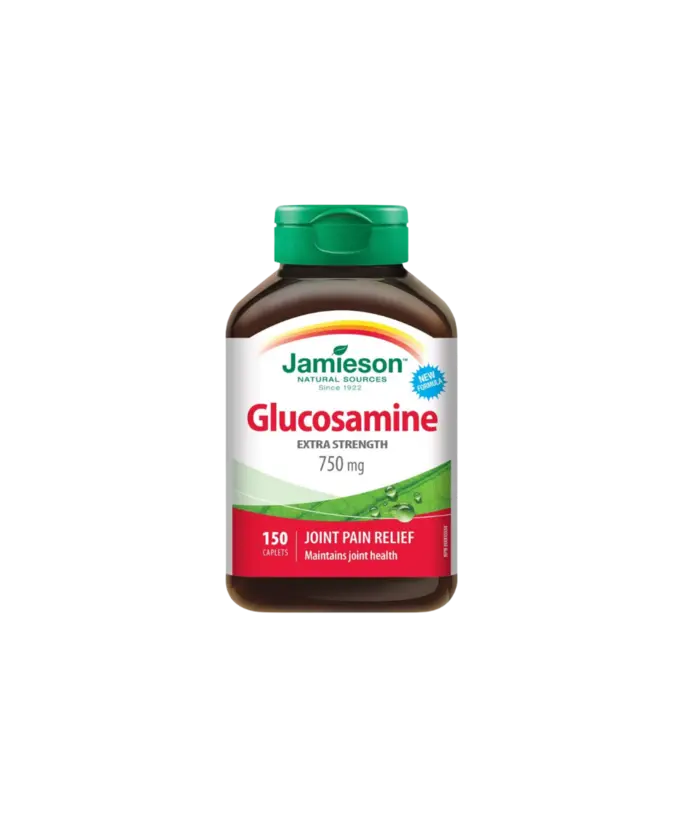
C Overall Grade

Pros

  • Heritage Canadian brand, established 1922
  • Shellfish-free glucosamine option available
  • Non-GMO certified with transparent labelling
  • Straightforward two-ingredient formula (no proprietary blends)

Cons

  • Three caplets daily required for the full serving
  • No vitamin C or MSM included in the formula
  • UK stock often via third-party Amazon sellers (variable pricing)

The Bottom Line

Jamieson is Canada's most recognised supplement brand, with over a century of manufacturing experience. Their approach here is stripped-back: glucosamine and chondroitin, nothing else. For minimalists who want two active ingredients without supporting vitamins or herbal extracts, this simplicity has appeal.

The shellfish-free option is a genuine plus for allergy sufferers, and the transparent labelling is appreciated. However, the formula contains no vitamin C or MSM, which limits how comprehensively it supports joint health compared to more complete formulas.

UK availability is the practical concern. Jamieson does not have a direct UK distribution channel, so stock comes through third-party Amazon sellers. This means pricing fluctuates and expiry dates can vary. If you can source it reliably, it is a decent basic formula.

Best for: minimalists who want a simple glucosamine-chondroitin combination from a long-established brand.

*Results and rankings are based on subjective opinion and do not necessarily reflect typical results from the use of these products. Please visit product website for more information.

CITATIONS

  1. Reginster JY et al. "Long-term effects of glucosamine sulphate on osteoarthritis progression: a randomised, placebo-controlled clinical trial." The Lancet, 2001;357(9252):251-256.
  2. Bruyere O et al. "Glucosamine sulfate reduces osteoarthritis progression in postmenopausal women with knee osteoarthritis." Osteoarthritis and Cartilage, 2004;12(4):269-276.
  3. Zhu X et al. "Effectiveness and safety of glucosamine and chondroitin for the treatment of osteoarthritis: a meta-analysis of randomized controlled trials." Journal of Orthopaedic Surgery and Research, 2018;13:170.
  4. Singh JA et al. "Chondroitin for osteoarthritis." Cochrane Database of Systematic Reviews, 2015;1:CD005614.
  5. EFSA Panel on Dietetic Products, Nutrition and Allergies. "Scientific Opinion on the substantiation of health claims related to vitamin C and contribution to normal collagen formation." EFSA Journal, 2009;7(9):1226.
  6. Towheed TE et al. "Glucosamine therapy for treating osteoarthritis." Cochrane Database of Systematic Reviews, 2005;2:CD002946.
  7. BBC Good Food. "The best joint supplements 2024: treat stiffness and joint pain." December 2024.